



 日本語
日本語  Deutsch
  English
  Español
  Français
  Português
Long before any man ever sat across from a doctor reviewing sperm count results on a printed lab report, he was already obsessed with the same fundamental question: Am I fertile? Can I carry my name forward? Can I leave something behind?
That obsession didn't begin with science. It began with fear, with hope, and with every wild, creative, sometimes baffling thing the human male mind invented to answer a question nature refused to make simple. Across thousands of years and every inhabited continent, men didn't wait for medicine to tell them how to protect their seed. They built religions around it. They made laws about it. They ate, drank, prayed, and fought for it.
This is that story.
In Brief
- Men in ancient Egypt, Greece, Rome, China, and indigenous cultures built elaborate rituals around fertility and virility.
- Beliefs ranged from diet and sexual timing to sacred objects, amulets, and temple ceremonies.
- Many ancient instincts about sperm health, libido, and reproductive wellness have surprising echoes in modern science.
- Understanding where these beliefs came from — and why men held them so fiercely — says a lot about masculinity itself.
The Ancient World: When Your Fertility Was a God's Business
In ancient Egypt, fertility was not a private matter — it was cosmological. The god Min, depicted with an unmistakably erect phallus and arm raised holding a flail, was the patron of male sexual power and crop fertility. Men made offerings at his shrines before trying to conceive. Pharaohs performed ritual runs at Min's festivals to demonstrate their own virility — because a king who couldn't reproduce wasn't just a man with a problem, he was a nation with a problem. The idea that a man's reproductive power and the health of his land were the same force runs deep through Egyptian culture.
Egyptian men who struggled to conceive turned to priests, herbalists, and what we would now call folk medicine. Lettuce — specifically the tall, dark cos variety — was considered the sacred plant of Min and was believed to boost male sexual output. Modern nutritional science has since noted that romaine lettuce contains folate and certain antioxidants relevant to sperm health, though the Egyptians arrived at that conclusion through theology, not biochemistry.
Cultural Insight
The Phallus as Architecture
The ancient Romans didn't just worship phallic symbols — they built them into city infrastructure. Stone phallus carvings were embedded into roads, buildings, and bakeries as good-luck charms against infertility, bad harvests, and evil spirits. In Pompeii alone, archaeologists have catalogued dozens. A man's fertility was considered a public blessing, not a private concern.
The Greeks were equally invested but approached virility through the lens of balance and philosophy. For Hippocrates and later Aristotle, semen was not just reproductive material — it was concentrated life force, derived from blood and the brain. Wasting it carelessly was thought to physically weaken a man. This belief in semen as a finite, precious resource drove practices ranging from dietary restriction to specific sexual schedules designed to maximize reproductive potency. Athletes in ancient Greece, notably, were sometimes advised to abstain before competition for exactly this reason — not so different from the debates coaches have had in locker rooms for centuries.
Greek men who worried about their fertility visited oracles, made sacrifices to Dionysus or Priapus, and consumed foods believed to restore masculine power — onions, garlic, and various root vegetables show up repeatedly in ancient texts as virility tonics. Some of these have since been associated in modern research with cardiovascular health and testosterone-relevant nutrients like zinc and selenium, though no ancient Greek was thinking about micronutrients when he was crushing garlic into his wine.
Rome: Virility as Civic Duty
For Roman men, reproduction was inseparable from citizenship. The Roman state had a direct interest in how many children its male citizens produced, and during certain periods actually enacted legislation — the lex Iulia de maritandis ordinibus and related Augustan reforms — incentivizing marriage and penalizing childlessness among the upper classes. Being fertile wasn't just desirable; for a Roman man of standing, it was practically mandatory.
Roman men wore fascinum amulets — stylized phallic charms — around their necks and on their belts, hung them over doorways, and fastened them to children's clothing. These weren't considered lewd; they were apotropaic, meaning they were meant to ward off bad luck and protect male potency. Roman brides were walked over a phallus at the temple of Mutunus Tutunus before their wedding night, in a ritual aimed at ensuring fruitful marriage.
Meanwhile, actual reproductive strategy among Roman men included timing intercourse with lunar cycles, consuming specific herbs — fennel, pine nuts, and various preparations sold by herbalists in the forum — and visiting bathhouses in patterns believed to regulate bodily heat, which was thought to govern sperm production. Heat management turns out to be one area where ancient intuition and modern science converge pretty cleanly: scrotal temperature does affect sperm quality, and extended soaking in hot baths isn't doing your fertility any favors. The Romans just got there via a theory about elemental humors rather than thermodynamics.
"For most of human history, a man's fertility wasn't a medical issue — it was a moral one. It touched his honor, his lineage, his place in the cosmos." — Theo Navarro
East Asia: Jing, Essence, and the Conservation of Male Vitality
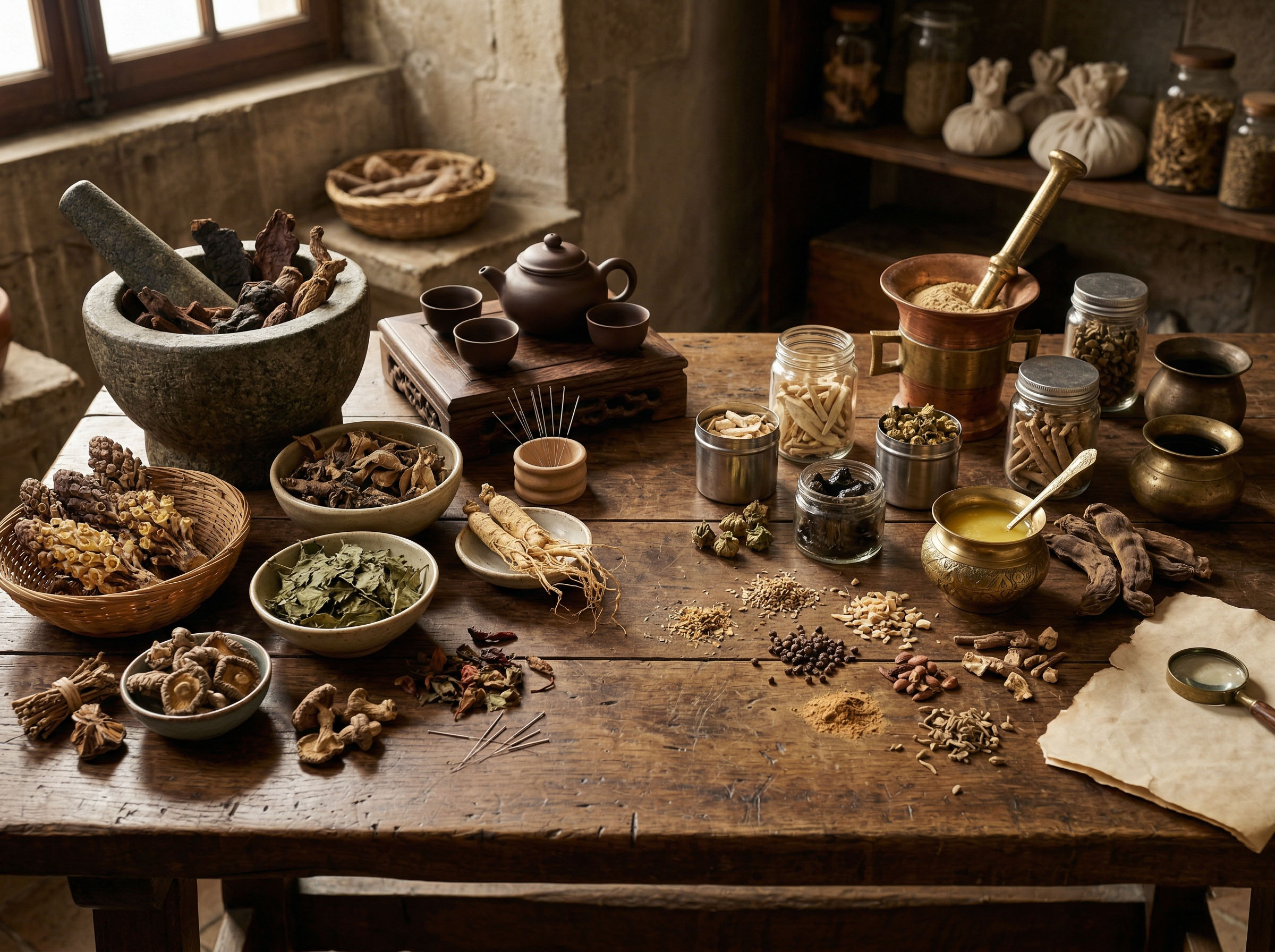
Traditional Chinese medicine developed one of the most systematic frameworks for male reproductive health in the ancient world, and it was built on a concept called jing — often translated as "essence" or "vital essence." Jing was understood as the foundational substance of life itself, stored primarily in the kidneys, and in men, it was closely associated with semen. Conserving jing was central to both health and fertility.
Chinese men practiced what was essentially a form of deliberate reproductive strategy centuries before the concept had a Western name. Medical texts dating back to the Han dynasty outlined specific conditions optimal for conception — time of month, time of day, the woman's physical condition, the man's emotional state — with a precision that looks almost clinical. Sexual practices aimed at preserving male essence while still conceiving were documented in Taoist texts, and a man who squandered his jing through excessive sexual activity without intentional conception was considered to be harming himself.
The herbal pharmacopoeia aimed at male fertility and sexual vigor in Chinese medicine is enormous. Herbs like He Shou Wu (Fo-Ti), Cistanche, Morinda root, and dozens of others have been prescribed for male reproductive health for over two millennia. Many remain in active use in traditional practices today, and some have been subject to modern pharmacological investigation. The results are mixed — some show genuine promise in preliminary research related to testosterone, sperm motility, and libido — but the track record of Chinese herbalists as careful observers of male health over centuries is not nothing.
In Ayurvedic medicine — the ancient Indian healing system — male reproductive capacity was governed by the concept of shukra dhatu, the reproductive tissue considered the final and most refined product of a chain of bodily transformation. Maintaining the health of shukra required right living, proper diet, and specific herbs. The Ayurvedic herb ashwagandha has been used for male fertility for thousands of years and has now been studied in clinical contexts, with some trials suggesting meaningful improvement in sperm count and motility. That isn't a coincidence born of luck — it's the result of thousands of years of careful, if pre-scientific, observation.
Did You Know?
Modern clinical research published in peer-reviewed journals has found that ashwagandha (Withania somnifera) — used in Ayurvedic male fertility practice for over 3,000 years — can increase sperm concentration and motility in men with low counts. Ancient observation and modern science sometimes end up in the same place, just via very different roads.
Indigenous and Tribal Cultures: Ritual, Community, and the Body as Sacred Land
Across sub-Saharan Africa, Mesoamerica, and the Pacific Islands, male fertility was managed not through individual practice alone but through communal ritual. The idea that a man's reproductive power existed in isolation from his tribe, his ancestors, and the land itself was essentially foreign. Fertility was collective, and the ceremonies that supported it reflected that.
In many West African traditions, specific fertility rites for men involved contact with ancestral objects — carved figures, masks, or natural materials — believed to carry the procreative power of those who came before. A man seeking children might spend nights at a sacred site, fast, or undergo physical challenges designed to demonstrate the vigor required of a father. These were not superstitions in a dismissive sense; they were structured psychological preparation combined with community investment in a couple's reproductive success.
Among the Aztec, the god Xipe Totec — the Flayed One — was associated with agricultural fertility, renewal, and male vitality. Men participated in ceremonies during which seeds were planted and warriors engaged in ritual combat, tying masculine physical power directly to the capacity of the earth to produce life. The male body and the productive earth were the same metaphor wearing different clothing.
Indigenous cultures of North America held widely varied beliefs, but a common thread across many nations was the connection between male hunting prowess, physical strength, and reproductive standing. A man who was a capable hunter and provider was assumed to be fertile — not because these things are biologically linked in any direct way, but because the community understood, on some level, that health, vitality, and reproductive capacity tend to move together. That's not wrong. It's a reasonable inference from observation.
Table: Male Fertility Beliefs & Practices Across Cultures and Eras
Medieval Europe: God, Church, and the Anxious Husband
In Christian medieval Europe, male infertility carried a weight it had never quite carried elsewhere: it was a potential sign of spiritual failing. While the church officially acknowledged that both men and women could be infertile, the cultural default was usually to suspect the woman first — which had its own ugly consequences — but a man known to be unable to father children faced profound social stigma tied directly to questions of God's favor.
The practical responses were a mix of the religious and the folkloric. Men made pilgrimages to shrines associated with saints believed to aid fertility. They wore relic amulets and participated in blessings. Parish priests and local herbalists — occupations that overlapped more than the church would have officially preferred — prescribed everything from specific prayers recited during intercourse to preparations involving mistletoe, mandrake root, and stinging nettle. Mandrake in particular had an almost mythological status as a fertility enhancer across Europe and the Near East, rooted in its biblical mention in Genesis and its striking humanoid root shape.
The concept of impotence in medieval law was a serious matter, potentially grounds for annulment under canon law — and establishing it required what would now seem extraordinary procedures, including testimony from witnesses about a man's capacity to perform, and in some documented cases, supervised "trials" overseen by local clergy. A man's reproductive function was a legal status, not just a personal concern.
The Renaissance and Early Modern Period: Anatomy Meets Alchemy
The Renaissance brought the gradual, occasionally violent collision of ancient belief systems with emerging scientific observation. Men like Vesalius produced actual anatomical drawings of the male reproductive system, and for the first time, the structures involved in reproduction could be seen and named with some accuracy. This didn't immediately displace older beliefs — people rarely abandon a working mythology for an incomplete science — but it began the long process of grounding fertility beliefs in something observable.
Alchemical traditions in this period produced elaborate "spagyric" preparations — herbal extracts processed according to planetary alignments and elemental theory — aimed at restoring male potency. These weren't quackery in the simple sense: they were the best available framework for thinking about the body, blending what we would now separate as chemistry, medicine, astrology, and psychology into one system. Some of the herbal preparations in use were effective for reasons nobody at the time could explain correctly. Saw palmetto, used for male reproductive and urinary health in European folk medicine since at least this period, is now among the most widely sold botanical supplements in men's health.
What the History Actually Tells Us
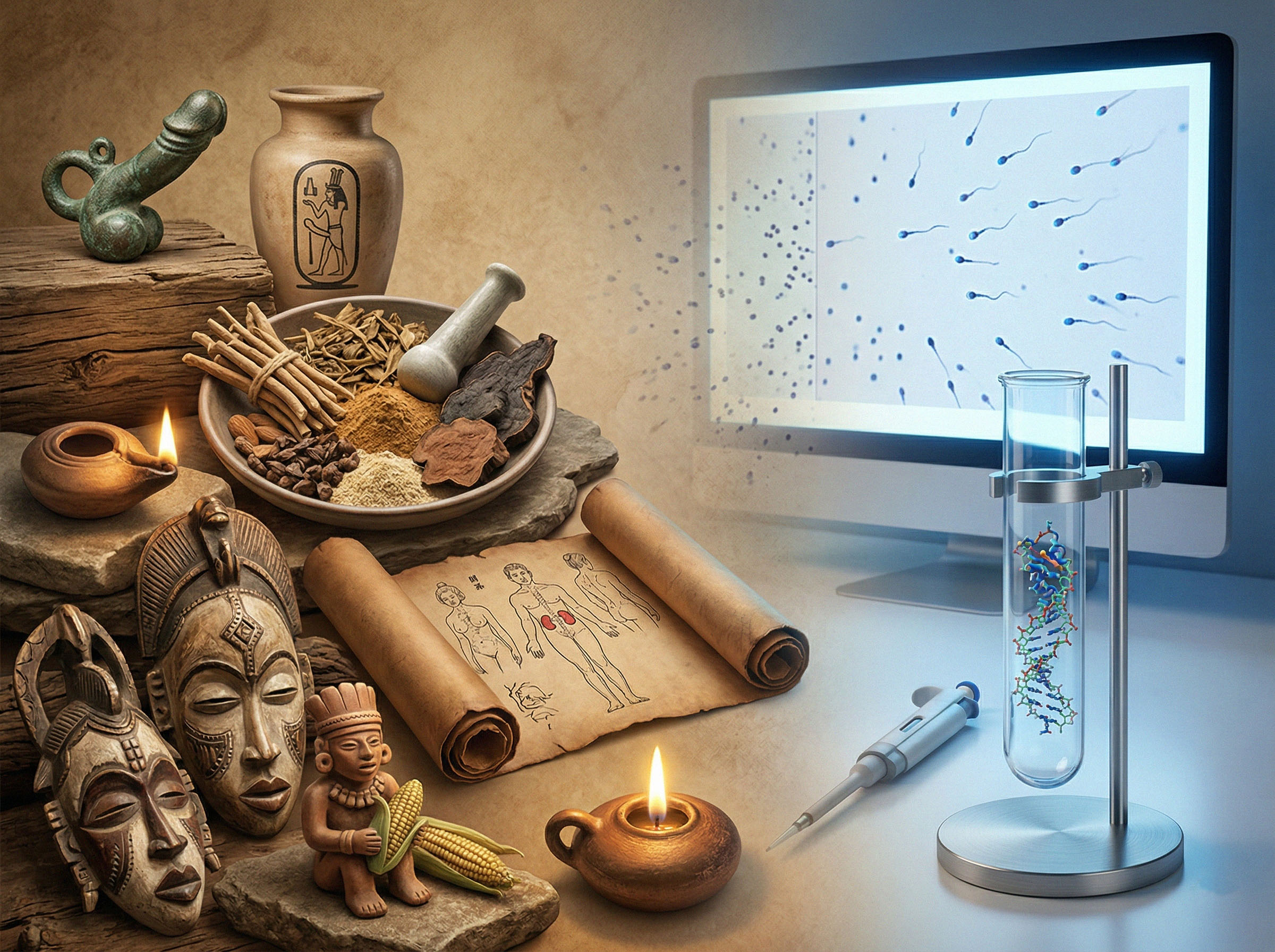
Step back and look at all of it — Egypt, Greece, Rome, China, India, West Africa, medieval Europe — and a pattern becomes clear. Men in every culture, in every era, have put serious thought, significant resources, and genuine emotional weight behind the question of their own fertility. The methods differed wildly. The underlying drive did not.
That drive isn't something to be embarrassed about. It's one of the most consistent features of masculinity across all of recorded human experience. Whether a man was making offerings to Min or scheduling his sex life around lunar cycles or drinking ashwagandha preparations or buying saw palmetto capsules online, he was doing the same fundamental thing: taking active responsibility for his reproductive health rather than leaving it to chance.
There's also a striking amount of ancient wisdom that has aged surprisingly well. Dietary emphasis on zinc-rich foods, temperature management, stress reduction, the conservation of sexual energy, the connection between general physical health and reproductive capacity — these ideas show up across cultures that had no contact with each other, which suggests they were observing something real, even if their explanations for it were not. The human body is a consistent machine. People paying close attention to it across centuries tended to notice the same things.
What Ancient Men Got Right About Sperm Health
- Heat management — Roman bathhouse caution, Greek awareness of body temperature. Scrotal thermoregulation is scientifically real and practically important.
- Diet and minerals — Zinc (alliums), folate (lettuce), antioxidants (various herbs). Micronutrients matter for sperm production and DNA integrity.
- Stress and cortisol — Ritual, prayer, community support, and ceremony all served as stress management. Chronic stress measurably suppresses testosterone and sperm quality.
- Physical conditioning — The association between strength, fitness, and fertility wasn't metaphorical. Cardiovascular health and testosterone track together.
- Sexual timing and frequency — Various cultures developed intuitions about optimal frequency and timing that reflect real biology around sperm replenishment cycles.
The Myths That Didn't Age Well
Not everything survived the test of time, of course. The idea that infertility was always the woman's fault was wrong, demonstrably and consequentially so — roughly half of all fertility challenges involve a male factor, a fact that took Western medicine embarrassingly long to fully reckon with. The belief that semen originated in the brain, held across multiple cultures, has no basis in anatomy. The planetary timing systems of the alchemists, the magical properties attributed to mandrake root's humanoid shape, and various ritual purity requirements imposed on men before attempting conception were either neutral at best or genuinely harmful at worst.
The idea that a man's infertility was evidence of spiritual failing was perhaps the most damaging long-term legacy — it drove shame underground, made men avoid seeking help, and left generations of couples without answers because the man refused to be examined. That particular belief deserves to stay in the past.
Where We Are Now
Modern reproductive medicine has given men something their ancestors never had: actual data. A semen analysis today tells you sperm count, motility, morphology, and more, with a precision that no ancient physician could have imagined. We know which lifestyle factors damage sperm — chronic heat exposure, smoking, heavy alcohol use, anabolic steroids, excessive body fat, environmental toxin exposure — with a specificity that moves well beyond theory.
According to research from institutions including the National Institute of Child Health and Human Development, male infertility is a factor in roughly 40 to 50 percent of couples experiencing difficulty conceiving, yet men remain far less likely than women to seek evaluation or discuss reproductive concerns openly. The silence that medieval shame helped build is still operating, even now.
The good news: the same proactive instinct that sent an Egyptian man to the temple of Min, that had a Chinese physician carefully adjusting a patient's herbal regimen, that drove a Roman husband to manage his bathhouse habits — that instinct is still the right one. Taking your reproductive health seriously, getting information, making deliberate lifestyle choices, and talking to a qualified healthcare provider when something seems wrong — that's the modern version of what men have always done.
The tools are better. The shame should be less. The drive is the same.
Frequently Asked Questions
By the Numbers: Male Fertility Today
| 40–50% | of infertility cases involve a male reproductive factor |
| 50% | average sperm count decline in Western men over the past 40 years (meta-analysis data) |
| 72–96°F | optimal scrotal temperature range — 4–7°F below core body temperature, as ancient Romans intuitively managed |
| 3,000+ | years ashwagandha has been used in Ayurvedic male fertility practice — now being studied in clinical trials |
The World Health Organization estimates that infertility affects roughly one in six people globally over a lifetime — and in a meaningful proportion of those cases, male reproductive factors are part of the picture. The history of how men have responded to that challenge is long, creative, and ultimately consistent: they didn't accept helplessness. They did something about it.
That's an old tradition worth keeping.
Disclaimer: The articles and information provided by Genital Size are for informational and educational purposes only. This content is not intended to be a substitute for professional medical advice, diagnosis, or treatment. Always seek the advice of your physician or another qualified health provider with any questions you may have regarding a medical condition.


