



There is a scene that plays out in barbershops, construction sites, locker rooms, and kitchen tables across the world. A man is struggling — with stress, with his marriage, with his sense of purpose — and when someone asks how he is doing, he says, "Fine." Just that. One word. A wall. And behind it, a man who has been told, either directly or by the ambient pressure of culture, that feeling too much is a weakness and expressing it is worse.
That scene is older than any of us. And it is changing — slowly, messily, imperfectly. But it is changing. The question worth asking is not whether men should change, but how that change actually happens in a way that does not strip a man of his identity, his backbone, or his sense of self.
This is not an article about becoming soft. It is about becoming sharper.
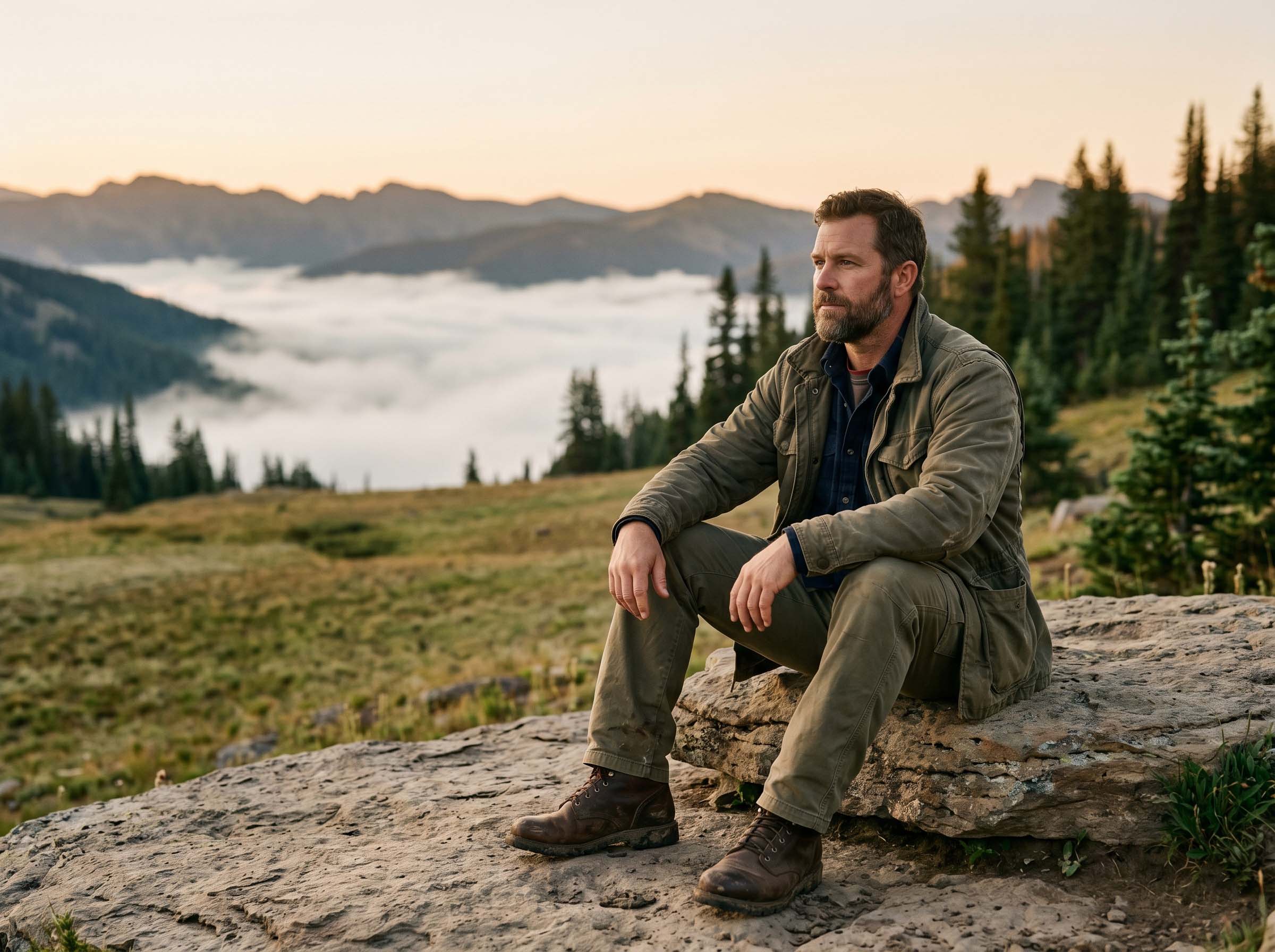
Machismo: What It Was, What It Became
The word machismo comes from Spanish and Portuguese — rooted in macho, originally meaning "male animal." Historically, it described a code of behaviour in Latin cultures centred on physical courage, family protection, and honour. For generations of men in Mexico, Spain, and South America, machismo was not simply swagger — it was a survival framework. Men were expected to be providers and protectors in societies that offered few other structures for social standing.
🌐 Cultural Insight
The Japanese Art of Gaman
In Japanese culture, gaman (我慢) means bearing the unbearable with dignity and patience. It is not emotional repression — it is emotional discipline. After the 2011 Tōhoku earthquake, survivors who embodied gaman were studied by sociologists for their remarkable composure and community-first mindset. The distinction matters: silence born of shame is destructive; silence born of self-mastery is something else entirely. Many researchers suggest gaman represents a bridge between stoic tradition and psychological resilience.
Anthropologists studying masculinity across cultures have noted that nearly every human civilization developed some version of this framework — rigid, role-defined, honour-driven masculinity. Norse warriors, Samurai, Roman Patricians, and the stoic American frontiersman all operated under codes that prized composure under fire, loyalty to kin, and the ability to endure pain without complaint.
The problem was never the values at the core — strength, responsibility, composure. The problem was what happened when those values calcified into a rigid performance that left no room for anything else. When stoicism became stonewalling. When toughness became an inability to ask for help. When the protector role became an excuse to never be vulnerable with the people you were protecting.
Research from the American Psychological Association and several independent longitudinal studies suggests that men who score high on what psychologists call "traditional masculine norms" — specifically, self-reliance to the extreme — are significantly less likely to seek medical care, report mental health struggles, or maintain close friendships as they age. This is not a political statement. It is a practical one. The version of strength that refuses all maintenance is the version that breaks down.
"The version of strength that refuses all maintenance is the version that breaks down."
— From the article
The Quiet Revolution in Men's Daily Living
Something has been shifting. Not loudly — men rarely do things loudly unless they're at a stadium — but measurably. Over the past decade, men's wellness has gone from a niche concern whispered about in therapy offices to a mainstream conversation happening at gyms, podcasts, and around fire pits.
Many men report that what changed first was not their mindset — it was their routine. A consistent morning, a workout regimen, time in nature, a hobby that demanded full presence. Research suggests that structured daily routines directly affect stress hormones, sleep quality, and emotional regulation — areas that have historically been underprioritized by men who were too busy "just getting it done."
The irony is that mindfulness — often dismissed as something soft, something vaguely feminine — has deep roots in some of the most warrior-driven cultures in history. Samurai practiced Zen meditation before battle. Roman general Marcus Aurelius wrote what would become one of the most-read philosophy texts in history (Meditations) as a private journal of daily self-examination. The Lakota warriors of North America performed vision quests — extended periods of solitude and reflection — as rites of passage into manhood.
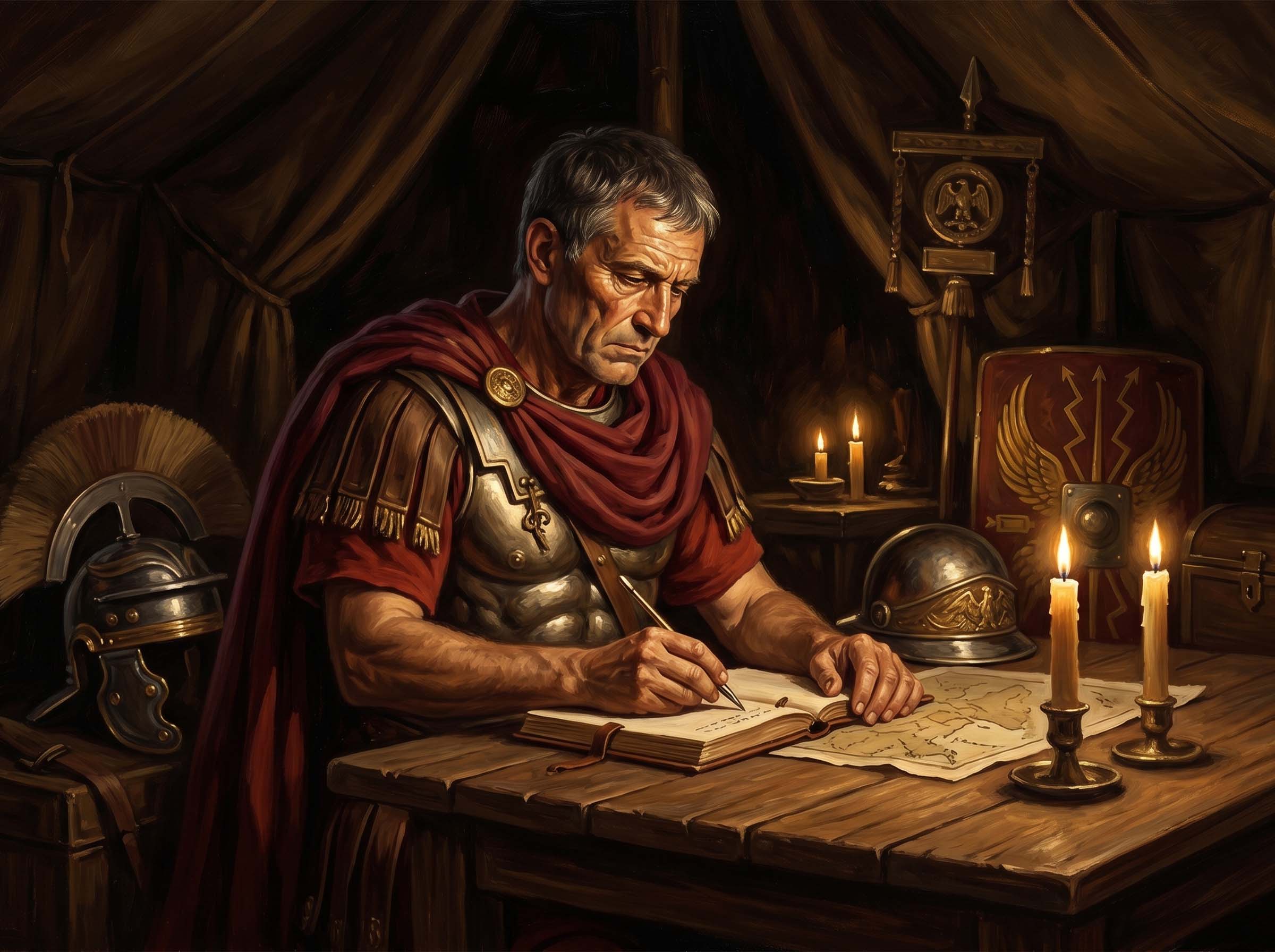
Mindfulness, in other words, is not a new idea dressed up in yoga pants. It is an old tool that got rebranded and marketed poorly for a while. Strip away the commercialism and what you have is simple: the ability to be fully present, to act with intention rather than reaction, and to know your own mind well enough to control it under pressure. That is what warriors have always wanted.
💡 Did You Know?
The U.S. military began formally integrating mindfulness-based stress reduction (MBSR) training for combat troops in the early 2010s. Studies conducted with active-duty soldiers found measurable improvements in working memory, emotional regulation, and resilience under pressure — the same skills demanded on the battlefield. Strength and self-awareness are not opposites. They never were.
Values, Identity, and the Man in the Mirror
One of the most underappreciated aspects of the current cultural moment is the question of male identity — specifically, who gets to define it. For much of the twentieth century, masculine identity was handed down through culture, religion, and family. A man knew what he was supposed to be because the world told him clearly. That clarity, whatever its costs, gave men a framework.
Today, those frameworks are contested and, in many cases, absent. Studies have explored how men who lack a clear sense of personal values — not culturally imposed roles, but their own, examined and chosen — report significantly higher rates of directionlessness, impulsive behaviour, and interpersonal conflict. The research does not suggest that men need to be told what to value; it suggests they need to do the work of figuring it out for themselves.
This is where mindful living enters as something genuinely useful for men — not as a feel-good trend, but as a practical discipline. Knowing what you stand for. Being able to sit still with discomfort rather than immediately medicating it with action, alcohol, or distraction. Building a life around your actual priorities rather than the priorities of whoever is loudest around you.
📊 Comparison
Traditional Machismo vs. Mindful Masculinity: What Actually Changes
What Balance Actually Looks Like for a Man
Balance is another word that has been diluted by overuse. Men are told they need work-life balance, emotional balance, dietary balance — and most of the advice sounds like it was written for someone else. So let's be direct about what balance means in practice for a man who wants to keep his edge while not running himself into the ground.
It means doing hard things on purpose. Cold water, heavy weights, difficult conversations, early mornings. Research suggests that voluntary exposure to controlled stress — what physiologists call hormetic stress — builds genuine resilience. A man who deliberately makes himself uncomfortable in manageable doses is less rattled by the uncontrollable chaos that life delivers without asking permission.
It means having a non-negotiable anchor in the day. Many men who report the highest sense of purpose and stability — across cultures, income levels, and occupations — share one trait: they have a consistent morning or evening practice that is theirs alone. Not because some podcast told them to. Because it grounds them. It could be prayer, training, journaling, silence, or a run. The format matters less than the commitment.
It means knowing the difference between being alone and being isolated. Men are often accused of avoiding connection, but the truth is more nuanced. Many men, historically and across cultures, built their deepest bonds through shared activity — hunting, building, working, competing. Research suggests that men connect shoulder-to-shoulder, not face-to-face. The need for meaningful male friendship is real and frequently unmet. A man without a handful of solid friendships is carrying more than he needs to.
⚡ Worth Saying Plainly
Self-awareness is not a retreat from masculinity. It is the advanced version of it. The man who knows his triggers, understands his patterns, and can regulate under pressure is harder to rattle, harder to manipulate, and harder to break than the man who has never examined himself at all. Knowing yourself is a competitive advantage — always has been.
Routine as Identity: The Daily Architecture of a Man
One of the most interesting things researchers have found when studying high-functioning men across demanding fields — military, surgery, athletics, entrepreneurship — is that their daily routines are rarely accidental. They are engineered. These men do not wake up and react to the day. They structure it before it can structure them.
Historically, societies have understood that the way a man organizes his time is a reflection of what he values. The Roman concept of virtus — loosely translated as excellence or virtue — was not an abstract quality. It was demonstrated through action, daily, in how a man showed up to his obligations. The Japanese concept of kaizen — continuous improvement through small, consistent actions — is another version of the same truth. Progress is not achieved in dramatic moments alone. It is built in the repetition of deliberate daily choices.
What does this look like practically? Research from sleep science and performance psychology consistently points to a few high-return habits: consistent sleep and wake times (even on weekends), physical training done before the distractions of the day accumulate, time spent in natural light, and deliberate digital disconnection during key hours. None of this is revolutionary. The difficulty is not knowing what to do — it is doing it when you don't feel like it. That is where character lives.
Self-Expression Without Apology
Men express themselves differently than women — and that difference is not a deficit. Research in developmental psychology and cross-cultural anthropology consistently shows that male self-expression tends to be more action-oriented, externalized through craft, competition, humour, and physical engagement with the world rather than through direct verbal disclosure.
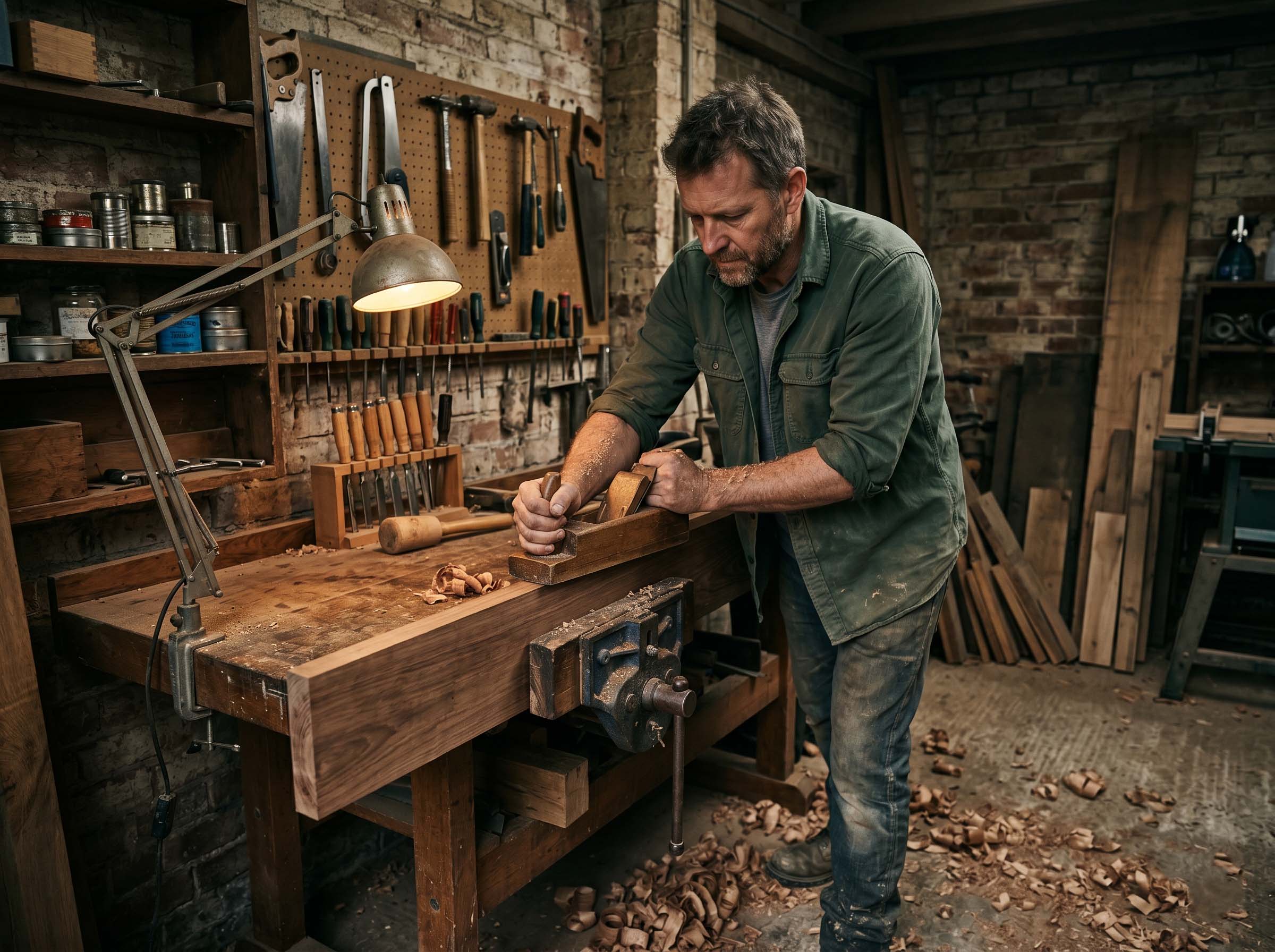
This is not a problem to fix. It is a style to work with. A man who rebuilds engines on weekends, coaches youth sports on Saturday mornings, grills for his whole street, or carves things out of wood is expressing himself — fully, authentically — even if he cannot describe his emotional state in clinical terms. The error is in assuming that one mode of expression is superior to another. They are different. Both are real.
What the shift from rigid machismo to something more grounded actually asks of a man is simpler than it is often made to sound: know yourself well enough to act from values rather than fear. Be tough in ways that serve the people depending on you. Be open in ways that serve your own interior life. Know the difference between strength and armour. Wear one, put down the other.
📈 By the Numbers
77%
of men report that a consistent physical routine is their primary stress management tool (Men's Health Network data)
1 in 3
men say they have no close confidant outside of their partner — a figure largely unchanged for decades
2,000+
years of Stoic philosophy used by military leaders — mindfulness for men has ancient, warrior-tested roots
The Shift Is Not About Surrendering Ground
Here is the thing that often gets lost in these conversations: becoming more self-aware, more intentional, more honest with yourself — none of that makes you less of a man. If anything, it takes more courage than the performance of invulnerability ever did. It is far easier to grunt and deflect than to sit with a hard question about who you are and what you actually want from your life.
The cultural shift from rigid machismo to mindful masculinity is not a defeat. It is a recalibration. It asks men to keep the things that have always mattered — discipline, responsibility, courage, protection, honour — and strip away the parts that were never about strength in the first place. The parts that were about fear. Fear of looking weak. Fear of being exposed. Fear that if you let anyone see you fully, they would find something insufficient.
Historically, societies have understood that the most capable men — generals, builders, philosophers, fathers — were not men who shut down. They were men who had enough command of themselves to choose their response rather than simply react. That is the target. Not softness. Not hardness. Precision.
The Long Game
Men who are still standing at sixty — still married, still close to their children, still sharp, still respected — did not get there by accident. They got there by playing a long game. By recognising early enough that the image of strength they were sold in their twenties had a shelf life, and that the thing that would carry them further was not louder or harder but more deeply rooted.
The shift from machismo to mindful living is not a trend. It is a return. A return to what the best versions of masculinity have always looked like across history and across cultures: a man who knows what he stands for, who shows up reliably, who does not need external noise to confirm his own worth, and who builds something — a family, a craft, a community, a body of work — that outlasts his ego.
That man is not soft. He is the most dangerous thing there is: a man who knows exactly who he is.
❓ Frequently Asked
From Machismo to Mindful Living — Questions Answered
📚 For Further Reading
Research and historical perspectives cited in this article draw on decades of cross-cultural study. For those who want to go deeper, two high-authority sources are worth your time:
- APA Guidelines for Psychological Practice with Men and Boys — the leading clinical framework for understanding male psychology, self-reliance norms, and health outcomes in men.
- A Historical Overview of Masculinity Across Cultures — academic exploration of how honour codes, warrior traditions, and masculine identity have evolved across civilisations.
Disclaimer: The articles and information provided by Genital Size are for informational and educational purposes only. This content is not intended to be a substitute for professional medical advice, diagnosis, or treatment. Always seek the advice of your physician or another qualified health provider with any questions you may have regarding a medical condition.


