



 日本語
日本語  Deutsch
  English
  Español
  Français
  Português
Nobody warns you about the weight of a newborn.
Not the physical weight — that part, frankly, is nothing. A bag of sugar. A small cat. What they don't warn you about is the other weight. The kind that settles somewhere behind your sternum the first time a nurse places your child against your chest. The kind that doesn't lift. The kind you never want to lift.
That moment — raw, unrehearsed, slightly terrifying — is where fatherhood begins. Not at the pregnancy test. Not at the sonogram where you squinted at a grainy blob and nodded like you could see what the technician was pointing at. It begins the instant that tiny, wrinkled, furious person arrives in your arms and looks up at you — and somehow, despite knowing nothing about the world, already knows exactly who you are.
What follows is unlike anything a man can prepare for, and yet men have been walking into it blind since the beginning of time. Here's what nobody quite says out loud: it changes you at a cellular level. Your priorities rearrange themselves without permission. Your understanding of fear — real fear — gets completely rewritten. And somewhere in the chaos of sleepless nights and first smiles and scraped knees, a man discovers parts of himself he didn't know were there.
That tiny, wrinkled, furious person arrives in your arms and looks up at you — and somehow, despite knowing nothing about the world, already knows exactly who you are.
— Theo NavarroThe Instant Bond Nobody Talks About
Men are not supposed to fall apart in delivery rooms. That's the unspoken rule. Hold her hand. Say the right things. Be steady. Be present. Be the rock.
But ask most fathers — honestly, privately, in a setting where there's no audience — and they'll tell you something else happened. Something cracked open. Not in a broken way. In a way that lets more light in than before.
Science has tried to explain it, and to its credit, it's gotten somewhere. When a man holds his newborn child, oxytocin — the same neurochemical behind bonding, trust, and deep human connection — surges through him. Testosterone, the hormone most associated with traditional masculinity, shifts. It doesn't collapse. It redirects. A father's testosterone levels in the early stages of parenthood naturally moderate, particularly during close physical contact with his infant. Prolactin rises. The body, it turns out, has its own on-ramp to fatherhood.
But no chart or hormone panel fully captures what a man feels in that first hour. There's a recognition that defies biology textbooks. Something in the architecture of the human male responds to his child in a way that simply cannot be reduced to chemistry. It's primal. It's quiet. And for a lot of men, it's the first truly unguarded emotional moment they've experienced as adults.
That bond — that first electric current of love and responsibility — is the foundation everything else is built on.

Sons and Daughters: Two Different Kinds of Love
Ask a father with both a son and a daughter how he relates to each, and watch his face shift slightly as he searches for the right words. Not because the love is different — it isn't. But the expression of it, the texture of it, takes on completely different forms.
With a son, there's a kind of mirror. A man looks at his boy and sees echoes of his own childhood, his own struggles, his own victories. He teaches differently. He corrects differently. He gets competitive over things like how fast the kid runs, whether he will excel in school or whether he'll shake someone's hand properly. There's an undercurrent of legacy in every soccer game, every homework session, every lesson about standing up for yourself. A father raising a son is, in many ways, writing a letter to the future — a set of instructions delivered through example, through challenge, through the firm hand on the shoulder that says: *I'm watching. I believe in you. Don't fold.*
With a daughter, a man is often disarmed in ways he didn't see coming. The protection instinct, which we'll get to, is ferocious. But alongside it comes something else: a tenderness that many men didn't know they were capable of. Fathers of daughters often become the first male relationship that shapes how a girl understands men — their reliability, their strength, their capacity for gentleness. That's an enormous thing to carry, and most dads feel its weight quietly and carry it willingly.
Neither dynamic is better. Both are irreplaceable. The man who has raised both a son and a daughter has learned to speak two entirely different emotional languages — and both have made him better at the other.
🌍 Cultural Insight
Fathers Around the World
In Japan, the concept of ikumen — a portmanteau of "ikuji" (child-rearing) and "men" — celebrates fathers who are actively involved in raising their children. It became a cultural movement in the 2010s, challenging traditional hands-off fatherhood norms.
In many parts of West Africa, a father's role is deeply tied to oral tradition — passing down history, values, and family identity through story. The act of telling a child who they come from is considered a sacred responsibility.
Across Scandinavian countries, paternity leave is standard and heavily used. Norwegian fathers take an average of 10–15 weeks of dedicated leave — a policy rooted not in ideology but in the understanding that early father-child bonding shapes outcomes for children for decades.
The Primal Force: Protection
Here's something every new father discovers, usually in the first 48 hours: there is no version of his former self that could have understood this feeling.
The protection instinct in a man, once his child arrives, is not a polite concern. It is something older and larger than reason. It bypasses the rational mind entirely and goes straight to the part of the brain that kept his ancestors alive on open plains. It doesn't ask for permission. It doesn't come with an off switch.
That instinct shows up in ways both dramatic and mundane. It's the surge of adrenaline when a toddler stumbles toward a table edge. It's the way a man's body turns slightly, unconsciously, to put himself between his child and an unfamiliar person. It's the 2 a.m. check to make sure the baby is still breathing — not out of paranoia but out of something far deeper, something closer to covenant.
As children grow, the shape of that protection changes but never dims. It becomes the difficult conversation about the wrong crowd. The "I don't care how late it is, text me when you're home." The quiet, fierce pride when your kid stands their ground in a hard situation. The protection of a father evolves from physical to psychological, from guarding the body to guarding the spirit — but the engine behind it is the same one that lit up the day that child was born.
💡 Did You Know?
A Father's Brain Actually Changes
Research published in Cerebral Cortex found that new fathers experience measurable structural changes in the brain — particularly in regions associated with empathy, reward processing, and caregiving — in the months following a child's birth. Fatherhood doesn't just change how a man thinks. It changes the physical organ doing the thinking.
The Economic Engine Kicks In
There's an old observation — partly a joke, mostly true — that a man's ambition gets dramatically sharper the moment he has someone depending on him. The research backs it up. Men who become fathers consistently show increases in work effort, career focus, and long-term financial planning compared to their pre-child selves.
It's not complicated. The math of responsibility is simple: more mouths require more resources. But what's interesting is how that shift happens internally. For many men, the birth of a child is the first time in their lives that their own comfort, their own preferences, genuinely move to second place — and not reluctantly. The ambition that kicks in isn't grinding resentment. It's fuel. There's a clarity that comes with knowing exactly why you're showing up every day.
This is the economic dimension of fatherhood that rarely gets discussed in popular culture, which tends to focus on diaper changes and bedtime stories. But the man quietly renegotiating his mortgage, picking up an extra certification, staying late because the school fees are coming — that man is also doing the work of fatherhood. Profoundly and without applause.
Across generations, a father building economic security for his family is writing a generational story. What a man builds — financially, professionally, in terms of reputation and standing — doesn't die with him. It flows forward. His children inherit not just money but mindset, habits, work ethic, and the knowledge that someone sacrificed for them. That's a kind of wealth no market can price.
📊 At a Glance
How Fatherhood Shifts a Man's Priorities Over Time
The Hormone Shift No One Mentions
Let's talk briefly about what's happening inside a new father's body — because it matters, and it's almost never brought up.
In the months surrounding the birth of a child, a man's hormonal landscape undergoes a genuine recalibration. Testosterone — that flagship of male identity — tends to dip during the early caregiving period. This isn't a dysfunction. It's adaptation. A man in close daily contact with his infant is, biologically speaking, shifting resources from competition toward caregiving. His body is adjusting to match the demands of the role he's stepping into.
At the same time, oxytocin (associated with bonding and connection) and vasopressin (linked to protective and pair-bonding behaviors) see increases. Cortisol — the stress hormone — also rises, partly explaining the constant low-level alertness most new fathers describe. That hypervigilance is not anxiety disorder. It's an organism taking its new responsibilities seriously.
The important point: these shifts are temporary and normal. As a child grows and a father's role stabilizes, testosterone typically rebalances. Men who remain physically active, sleep reasonably well, maintain good nutrition, and stay engaged in their work generally find their hormonal baseline returns. The body is remarkably good at this if you give it the right conditions.
⚡ Quick Note for New Dads
Protecting Your Energy Through the Early Years
✔ Do
- Stay physically active — even 20 minutes helps
- Eat whole foods, prioritize protein
- Sleep in shifts if you must, but protect rest
- Stay connected with other men — isolation compounds fatigue
- Talk about what you're feeling — to your partner, a friend, or a journal
✘ Don't
- Drown exhaustion in alcohol
- Withdraw from your partner assuming they "have it handled"
- Skip your own health check-ins
- Bottle emotional overwhelm — it compounds
- Measure yourself against social media versions of fatherhood
The Feeling That Has No Name
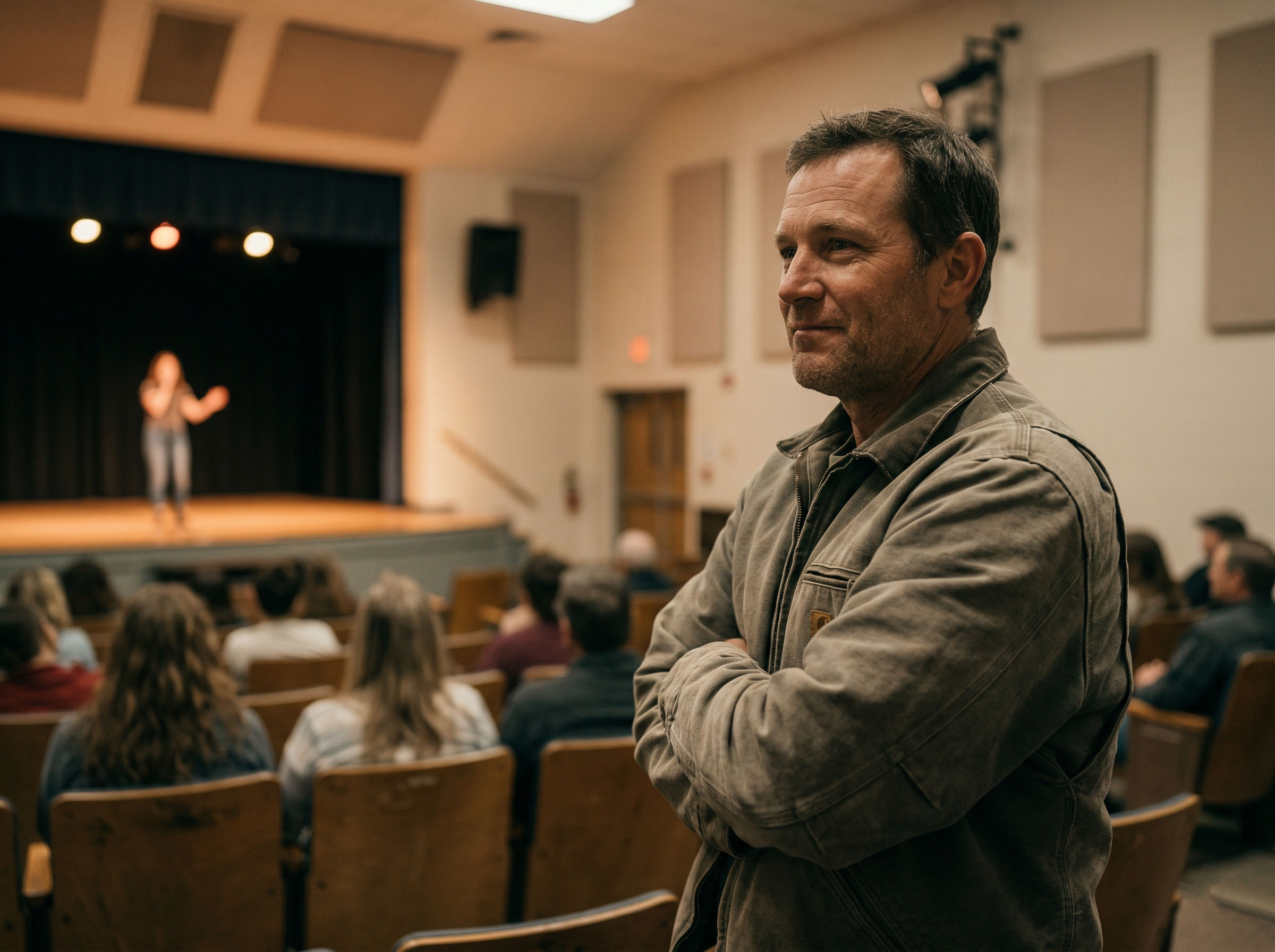
There is a specific experience that fathers — all fathers, regardless of culture, background, or personality — describe in nearly identical language. It happens at different moments for different men. For some, it's that first hold. For others, it's the first time their child says "Dada." For others still, it's watching their kid score a goal, or graduate, or walk across a stage, or call them from a city far away just to say hello.
The feeling isn't happiness exactly. It's bigger than happiness and less comfortable. It's a kind of fullness that almost hurts. It arrives without warning and sits in the chest like something that cannot be contained by ribs and muscle. Men who pride themselves on being unshakeable find themselves blinking hard at school plays. Grown men with rough histories and hard-won composure fall completely apart at a ten-year-old's birthday party.
There is no comparable feeling in a man's life. Not falling in love. Not professional achievement. Not the best day you've ever had. Nothing approximates what it means to have made a person — a whole actual person — and watched them grow into someone you genuinely respect and want to know.
Fatherhood doesn't soften a man. It deepens him. The same man who now cries at his kid's violin recital is also the same man who would walk through fire before he let something happen to that child. These things aren't contradictions. They're the same force expressing itself differently.
The Legacy You Leave Without Trying
Here is perhaps the most underrated dimension of fatherhood: the influence a man has simply by being present and consistent, without ever delivering a single formal lesson.
Children are extraordinary anthropologists. They are watching everything. The way their father speaks to their mother tells them what relationships look like. The way their father handles a loss tells them what resilience looks like. The way their father talks about money, work, health, and other people — all of it is curriculum, taught without a classroom.
This is where the concept of dynasty becomes more than metaphor. A father building his family is not just meeting the needs of the week. He is setting the default settings for the next generation. The values he holds, the standards he models, the limits he enforces and the ones he gives grace on — these get absorbed. They become the invisible architecture inside his children's characters.
That's the longest game in any man's life. And most men only fully understand it when they see it mirrored back to them — when their adult son disciplines his own child exactly as they once did, or when their daughter navigates a hard situation with a strength that looks familiar. In those moments, a man understands that his reach extends far past his own lifetime.
That's not a small thing. That's everything.
📋 In Brief
What This Article Covered
- The first hold and why it hits differently than anything a man has experienced
- How men bond differently — but equally deeply — with sons versus daughters
- The protection instinct: where it comes from and how it evolves as children grow
- The real hormonal changes new fathers experience and why they're normal
- How fatherhood drives economic ambition and long-term financial thinking
- The unnamed feeling that every father knows — and why nothing compares to it
- The generational legacy a present father leaves without ever writing it down
❓ Common Questions
Fathers Ask: The Emotional Side of Becoming a Dad
Fatherhood is not a role a man auditions for and then performs. It's a transformation. It arrives without a rehearsal and demands everything you have, then asks for a bit more. And somehow — through the exhaustion and the worry and the impossible love — it gives back far more than it takes.
There is no badge for it. No ceremony, beyond the one in that delivery room. No metric that can capture what it means to have built a person, watched them grow, and known that your fingerprints — your values, your stories, your example — are woven permanently into who they become.
That is the emotional side of becoming a dad. It doesn't have a clean summary. It has a weight in your chest that you'd carry forever without complaint.
And you wouldn't trade it for anything in the world.
Disclaimer: The articles and information provided by Genital Size are for informational and educational purposes only. This content is not intended to be a substitute for professional medical advice, diagnosis, or treatment. Always seek the advice of your physician or another qualified health provider with any questions you may have regarding a medical condition.