



 日本語
日本語  Deutsch
  English
  Español
  Français
  Português
There is a version of fatherhood nobody talks about — the one that begins long before conception. Not in the delivery room, not at the altar, not even on the night it happens. It begins in the gym. At the dinner table. In the hours you do or do not sleep. In the stress cortisol flooding your bloodstream at 2 a.m. because you haven't switched off in three years.
Epigenetics — the science of how environmental factors alter gene expression without changing the underlying DNA sequence — is rewriting what it means to be a man with a biological future. And the data coming out of labs across the United States, Europe, and Australia is not subtle: the lifestyle choices men make in their 20s, 30s, and 40s appear to leave biological fingerprints on their sperm, fingerprints that may be passed on to children and possibly grandchildren.
This is not science fiction. It is not fringe theory. And it is not a guilt trip. It is one of the most forward-looking conversations in modern biology — and men deserve to hear it straight.
"The lifestyle choices men make in their 20s, 30s, and 40s appear to leave biological fingerprints on their sperm — fingerprints that may be passed on to children and possibly grandchildren."
— Adrian Lowe, Insights / Trends & Forecasts
The Science Behind the Inheritance Nobody Expected
For most of the 20th century, biology operated on a clean rule: your DNA is your blueprint, and blueprints don't change based on whether you ate fast food for a decade or ran marathons. Then researchers started looking more carefully at the packaging around DNA — the chemical tags, the protein structures, the molecular switches — and the story got far more complicated.
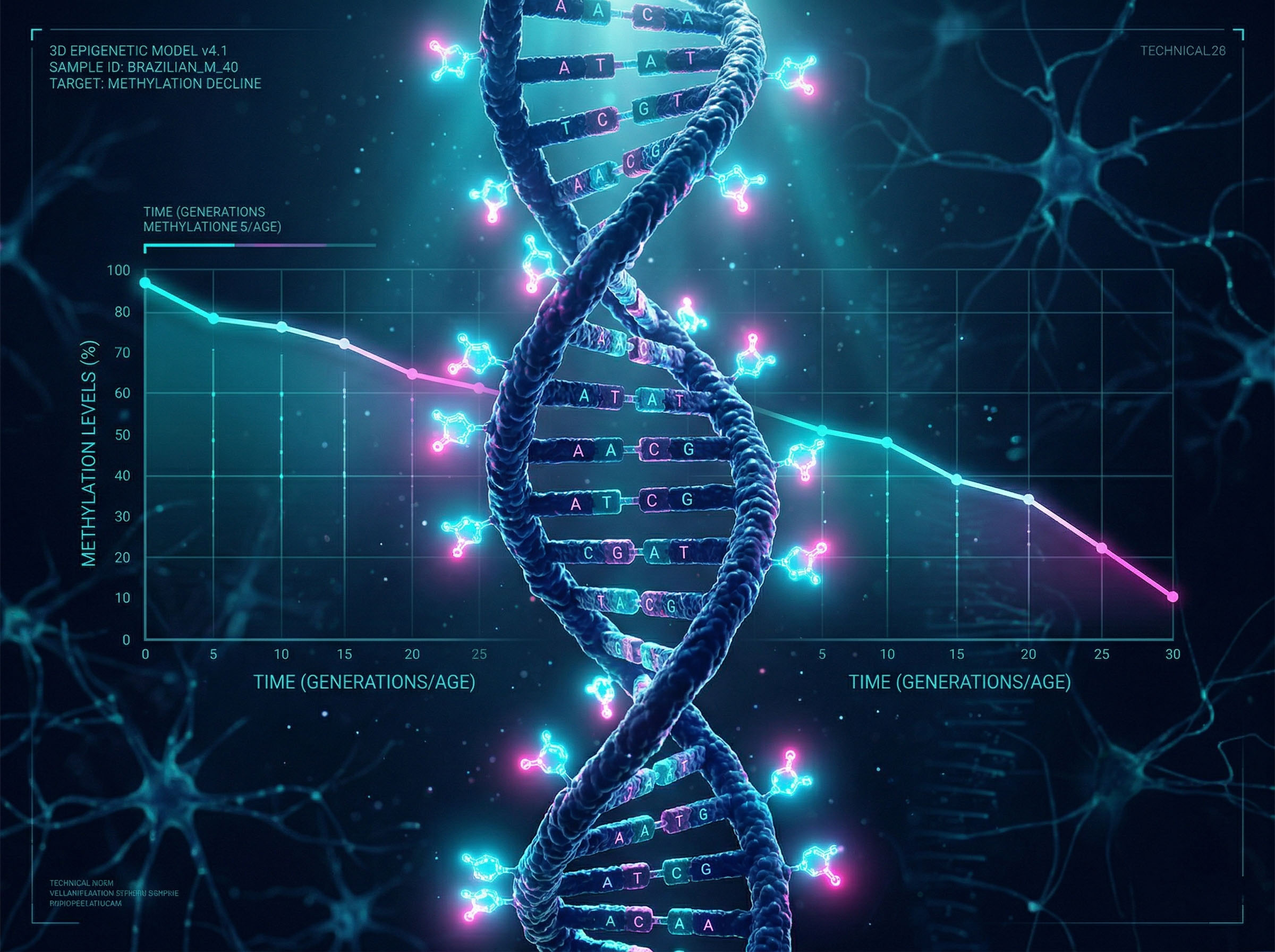
Epigenetic modifications, primarily through a process called DNA methylation, act like dimmer switches on genes. They don't rewrite the code; they determine how loudly or quietly certain genes are expressed. What stunned researchers is that these modifications are not always wiped clean when sperm is formed. Some survive. Some are transmitted.
A landmark study from researchers at the University of Massachusetts found that obese men had measurably different epigenetic profiles in their sperm compared to lean men — differences concentrated in genes associated with brain development, appetite regulation, and metabolic function. A separate line of research from the Karolinska Institute in Sweden traced the diet-driven epigenetic changes in grandfathers to metabolic outcomes in their grandsons. Not sons. Grandsons.
The mechanism is still being mapped, but the direction of the evidence is consistent: what men do to their bodies during the years they are biologically reproducing has a reach that extends well beyond themselves.
Obesity, Stress, and the Sperm You Don't See Coming
Two lifestyle factors are generating the most research attention right now: metabolic health and chronic psychological stress. Both are at epidemic levels in men aged 25–50 in Western countries. Both appear to have measurable epigenetic consequences.
Obesity in men — defined as a BMI above 30 — is now documented in roughly 40% of American adult males. Beyond the well-known risks of cardiovascular disease and type 2 diabetes, excess body fat disrupts the hormonal environment in which sperm develops. Elevated estrogen levels from fat tissue, combined with lower testosterone, alter the epigenetic landscape of developing sperm cells. Research published in Cell Metabolism found that the sperm of obese men showed hypomethylation — essentially, genes being left in a noisier, less regulated state — in regions associated with dopamine signaling and appetite control.
The implication? Sons of obese fathers may be more susceptible to obesity and reward-seeking behavior, not because of inherited DNA, but because of the epigenetic state of the sperm that conceived them. This is not fate, and it is not the child's fault. But it is a pattern worth taking seriously.
Chronic stress tells a parallel story. Cortisol, the stress hormone that was designed to help men sprint away from predators, is now running in the background 24 hours a day for millions of men grinding through high-pressure careers. Research from Mount Sinai School of Medicine found that men who reported high levels of childhood or adult trauma showed distinct epigenetic signatures in their sperm — specifically in genes regulating the stress response system. Their sons showed altered cortisol reactivity, suggesting a biological transmission of psychological vulnerability.
By the Numbers
| 74 days | Full sperm maturation cycle — the window in which lifestyle changes matter most before conception |
| ~40% | Percentage of American adult men now classified as obese, with documented epigenetic consequences in sperm |
| 3 generations | How far some epigenetic signals have been observed to transmit — father, son, and in some cases, grandson |
| 57% | Reduction in sperm count among Western men over the past 50 years, per a major 2022 meta-analysis update |
| 2–4x | Greater risk of metabolic disorders in children of fathers with poor diet, according to rodent and emerging human studies |
Testosterone, Environment, and the Gradual Reshaping of the Male Body
Average testosterone levels in men have been declining for decades. This is not a political statement. It is measured data from large population studies. A landmark analysis tracking American men from 1987 to 2004 found that testosterone levels had dropped by roughly 1% per year across all age groups — meaning a 60-year-old man in 2004 had significantly lower testosterone than a 60-year-old man measured in 1987, even controlling for age, weight, and health status.
Researchers are still debating causes, but the prime suspects include endocrine-disrupting chemicals (EDCs) found in plastics, pesticides, and personal care products; sedentary lifestyles; poor sleep quality; and rising rates of obesity. Many of these factors operate at least partially through epigenetic pathways.
What makes this trend alarming from a generational standpoint is not just what it means for individual men today — lower drive, reduced muscle mass, declining fertility — but what it may mean for the sons they produce. Animal models consistently show that fathers with disrupted hormonal environments produce offspring with altered hormonal baselines. If that pattern holds in humans at population scale, we may already be watching the early signs of a generational shift in male physiology.
Cultural Insight
Japan's "Herbivore Men" & the Epigenetic Question
Japan has tracked a significant cultural shift since the 2000s — the rise of so-called sōshoku-kei, or "herbivore men," characterized by lower aggression, reduced interest in sex and competition, and declining testosterone markers in younger cohorts. Researchers debate whether this is cultural, dietary, or biological. Some point to Japan's high exposure to endocrine-disrupting compounds through diet and urban pollution. The country's birth rate has collapsed to historic lows. While causation is unproven, Japan has become an inadvertent real-world case study in what happens when male hormonal and behavioral norms shift over 30 years at population scale.
The broader body image shift is already visible. Muscle density among men in their 20s is declining in population health data from multiple Western countries. Grip strength — a well-validated proxy for overall physical capacity — has dropped significantly in young men over the past 30 years. In a 2016 study published in the Journal of Hand Therapy, millennial men showed notably weaker grip strength than men the same age measured in 1985.
None of this is inevitable. And that is precisely why the conversation matters.
The Exercise Signal: Training as an Epigenetic Intervention
Here is where the science stops being alarming and starts being actionable. If lifestyle factors can drive negative epigenetic change, the same mechanisms should work in the opposite direction — and the evidence suggests they do.
Exercise, particularly resistance training and high-intensity interval training (HIIT), has been shown to produce measurable epigenetic changes in skeletal muscle, brain function, and metabolic regulation. Research from the Karolinska Institute found that just six months of structured aerobic exercise produced significant changes in the epigenome of fat cells, essentially switching on genes associated with fat metabolism and switching off genes associated with disease risk.
More relevant to the generational question: studies in both rodents and humans indicate that fathers who exercise regularly produce offspring with better metabolic health, improved brain function, and greater insulin sensitivity — even when those offspring don't exercise themselves. The signal appears to travel through sperm epigenetics. Fathers who trained regularly before conception passed on a measurably different biological starting point to their children.
This is not a reason to obsess over the gym. It is a reason to stop treating physical training as vanity and start recognizing it for what it increasingly appears to be: a form of biological stewardship.
Diet, Micronutrients, and the Code Your Sperm Is Currently Writing
Nutrition science has been messy for decades — too many headlines about single superfoods, too many contradictory studies. But when you zoom out and look specifically at what dietary patterns do to sperm epigenetics, some consistent patterns emerge.
Folate (vitamin B9) plays a critical role in DNA methylation — the primary epigenetic mechanism. Men with low folate intake show higher rates of chromosomal abnormalities in sperm. Zinc is essential for testosterone production and DNA integrity in sperm cells. Omega-3 fatty acids, found in fish and some nuts, are concentrated in sperm membranes and influence both motility and epigenetic stability. Excess sugar and processed food — particularly the kind that drives chronic inflammation — appear to disrupt methylation patterns in measurable ways.
A Mediterranean-style eating pattern — lean proteins, vegetables, olive oil, legumes, fish, moderate red wine — consistently outperforms Western fast-food patterns across virtually every metric of male reproductive health tracked so far. This is not a diet fad. It is a dietary pattern that has sustained male physical performance and reproductive health across cultures for centuries, and the epigenetic research is giving us a new molecular language to explain why it works.
Table: Key Nutrients, Their Role in Male Epigenetics & Top Food Sources
Sleep, Alcohol, and the Choices You're Probably Underestimating
Two lifestyle factors receive less attention than diet and exercise but may be just as consequential in the epigenetic picture: sleep and alcohol consumption.
Sleep is when the body performs the vast majority of its cellular repair and hormonal regulation. Men who chronically sleep fewer than six hours show measurably lower testosterone, higher cortisol, and impaired sperm parameters across multiple studies. More recently, researchers have started looking at whether sleep deprivation alters sperm epigenetics directly. Early data suggests it does — specifically in pathways related to brain development and immune function. The chronic sleep debt that millions of men are running carries a cost that isn't just personal.
Alcohol is more complicated. Moderate drinking — a drink or two a day — has not consistently shown dramatic effects on sperm epigenetics in the research to date. Heavy or chronic alcohol use is a different matter. Men who drink heavily show reduced sperm count, altered testosterone metabolism, and emerging evidence of epigenetic disruption in sperm. Research in animal models shows that paternal alcohol exposure before conception can alter stress responses and anxiety behavior in offspring through epigenetic mechanisms. The human data is not yet definitive, but the trajectory of the evidence is not comforting.
"The chronic sleep debt that millions of men are running carries a cost that isn't just personal. The body doing cellular repair tonight is also writing the biological starting point for tomorrow's generation."
— Adrian Lowe
The Chemical Environment Men Are Swimming In
Beyond the choices men make, there is an entire chemical environment they didn't choose but are living inside. Endocrine-disrupting chemicals — compounds that interfere with hormone signaling — are now so widespread in the modern environment that avoiding them entirely is essentially impossible. But understanding their scale matters.
Bisphenol A (BPA), found in many plastics, food can linings, and thermal paper receipts, mimics estrogen in the body and has been shown to alter DNA methylation patterns in sperm. Phthalates, used to make plastics flexible and found in everything from food packaging to personal care products, are associated with lower testosterone and altered sperm epigenetics. Pesticide residues on non-organic produce, per- and polyfluoroalkyl substances (PFAS) in water supplies, and air pollution from traffic — all are now documented as having measurable effects on male reproductive hormones and, increasingly, sperm epigenetics.
This is not a call to paranoia. Reducing exposure where practical — glass over plastic containers, filtered water, outdoor air, whole foods — has documented benefits without requiring anyone to retreat to a mountain. The point is that the epigenetic environment for today's men is more chemically complex than at any previous point in human history, and that complexity appears in the biology of their sperm.

What This Means for Male Identity in the Decade Ahead
Epigenetics is quietly forcing a recalibration of what it means to be a man who takes care of himself. For a long time, male health culture has been either purely aesthetic — lift to look good — or purely competitive — perform at peak. The generational framing changes that calculus.
Taking care of your body is no longer just about you. It is about the biology you will pass on. That is a very old idea — cultures have understood for millennia that strong men produce strong sons — but it is being given a new molecular vocabulary. And in a culture that has done its best to strip traditional male identity of meaning, it offers something quietly powerful: a reason beyond vanity, beyond competition, beyond performance, to live well.
This does not mean returning to anything or becoming anything ideological. It means recognizing that men's health has generational stakes, that the body is not just a vehicle for personal experience but a transmitter of biological information to the future, and that the decisions made in ordinary days add up to something that outlasts any one lifetime.
The research is early in some areas, robust in others, and still evolving across the board. But the direction is clear. Men who eat well, train consistently, manage stress, sleep adequately, and reduce exposure to endocrine-disrupting chemicals are not just building better lives for themselves. They may be building better biological starting points for the men who come after them.
That is not a burden. It is, if anything, a reason to take pride in the work.
In Brief
- Epigenetic modifications — changes in how genes are expressed — can be transmitted through sperm to the next generation.
- Obesity, chronic stress, poor sleep, heavy alcohol use, and chemical exposure have all been linked to measurable epigenetic changes in sperm.
- The 90 days before conception represent the most biologically sensitive window for a man's lifestyle to influence his child's starting point.
- Regular exercise and a diet rich in folate, zinc, omega-3s, and antioxidants appear to produce measurable positive epigenetic effects in sperm.
- Average testosterone levels and sperm counts in Western men have declined significantly over the past 50 years — a trend researchers attribute to lifestyle and environmental factors operating through epigenetic pathways.
- These findings do not override genetics or guarantee outcomes — but they give men a concrete, evidence-informed reason to invest in their own health beyond personal benefit.
Quick-Start: Building an Epigenetically Supportive Lifestyle
✔ Do This
- Prioritise 7–9 hours of sleep consistently
- Train with resistance and/or HIIT 3–5x per week
- Eat a diet rich in vegetables, lean protein, fish, and whole grains
- Supplement folate, zinc, and vitamin D if dietary intake is low (check with a doctor)
- Reduce plastic food and drink container use where practical
- Manage stress with structured decompression — training, time in nature, social connection
- Get bloodwork done — know your testosterone and metabolic baseline
✘ Avoid or Reduce
- Chronic sleep deprivation (fewer than 6 hours regularly)
- Heavy or binge alcohol consumption
- Sedentary stretches longer than 2–3 hours without movement
- High-sugar, ultra-processed food as a dietary staple
- BPA-lined cans and thermal receipt paper handling
- Unmanaged, sustained psychological stress over months or years
- Dismissing male health as a topic worth your time and attention
Questions Men Are Asking About Epigenetics
The science of epigenetics will not stay in academic journals. It is already influencing fertility clinics, sports medicine, corporate wellness programs, and military readiness research. Within the next decade, it is likely to reshape how men think about their bodies — not as machines to be run into the ground and repaired, but as living systems that are continuously writing a biological story the next generation will inherit.
That changes things. Or it should.
The question is not whether you are going to pass something on. You are. The question is what that something is going to be.
Disclaimer: The articles and information provided by Genital Size are for informational and educational purposes only. This content is not intended to be a substitute for professional medical advice, diagnosis, or treatment. Always seek the advice of your physician or another qualified health provider with any questions you may have regarding a medical condition.


