


 日本語
日本語  Deutsch
  English
  Español
  Français
  Português
Nobody warns you about it. One morning you're fine — sharp, motivated, your body doing what bodies do. Then somewhere in your early forties something starts to shift. It's not dramatic. It doesn't announce itself. It's a slow dimming: the drive to train, the edge at work, the appetite for sex, the ability to bounce back after a rough week.
You chalk it up to stress, bad sleep, getting older. And maybe you're partly right. But there's a very real biological current running under all of it, and its name is testosterone decline.
This isn't about vanity. It isn't about recapturing your twenties. It's about understanding what's actually happening inside your body so you can make informed choices — not feel ambushed by your own hormones at fifty.
The conversation around male hormonal health has finally started growing up. Men are talking more openly about energy, mood, libido, and the strange psychological weight of midlife. That's progress. But there's still a lot of noise — overclaiming supplement brands, fear-mongering headlines, and an internet flooded with conflicting advice. What follows is a grounded, honest look at testosterone, estrogen, and what aging really means for the male body.
In Brief
- Testosterone declines roughly 1–2% per year after age 30, often accelerating in the forties.
- Estrogen plays a necessary role in male health — the problem is imbalance, not estrogen itself.
- Low T affects mood, energy, sexual function, body composition, and cognitive sharpness.
- Lifestyle choices — sleep, diet, exercise, stress — have a measurable impact on hormone levels.
- Medical options like TRT exist and are worth understanding, but are not right for every man.
- The goal isn't to deny aging — it's to age without unnecessary decline.
The Numbers Behind the Decline
Testosterone doesn't fall off a cliff the morning you turn forty. The decline is gradual — studies consistently show a drop of roughly 1 to 2 percent per year beginning around age 30, with some men seeing steeper drops and others maintaining relatively healthy levels well into their sixties. The variation is real and influenced by genetics, lifestyle, body composition, and overall health.
What matters more than the rate of decline is where a man lands on the spectrum. Total testosterone is commonly measured in nanograms per deciliter (ng/dL). Most labs set the low end of "normal" at around 300 ng/dL — but many men feel genuinely symptomatic at levels that still technically fall within range. A man at 310 ng/dL is not the same as a man at 700 ng/dL, even if both are called "normal."
This is part of why so many men get bloodwork back, hear "everything looks fine," and still feel like something is wrong. The reference ranges are population averages, not performance targets. Your individual baseline — what your body was producing at age 25 — matters, and that number is rarely in your medical file.
Table: Testosterone Reference at a Glance
*Ranges are general estimates. Individual variation is significant. Consult a physician for personal assessment.
What Low Testosterone Actually Feels Like
The clinical checklist for low testosterone reads like a list of things men are told to just push through: fatigue, low libido, reduced muscle mass, increased body fat (particularly around the midsection), difficulty concentrating, irritability, and a general flattening of motivation. Individually, each symptom could have a dozen explanations. Together, they paint a recognizable picture.
The mood component is probably the least discussed and the most disruptive. Testosterone has a direct relationship with dopamine pathways — it's part of why healthy T levels tend to track with drive, confidence, and a general sense of forward momentum. When levels drop significantly, men often describe feeling "flat" rather than classically depressed. The ambition dims. The things that used to feel worth working toward start to feel optional. That shift in internal tone is hard to articulate but easy to feel.
Sexual function is another frank reality. Decreased libido is among the most common symptoms of low T, and for men in long-term relationships it can quietly erode connection and self-image. Erectile function involves a complex interplay of vascular health, nerve signals, and hormones — low testosterone is just one factor, but it's a meaningful one. Men often suffer this in silence because it carries a particular kind of shame that other health issues don't. That silence serves nobody.
"When testosterone drops significantly, men often describe feeling flat rather than depressed — the ambition dims, the things that used to feel worth working toward start to feel optional."
— Marcus Alcott / Body & Performance
The Estrogen Factor: Why Balance Matters More Than Elimination
🌍 Cultural Insight
Japan's Andropause Awakening
In Japan, where cultural stoicism around male vulnerability runs deep, the term 男性更年期 (dansei kounenki — male menopause) entered mainstream conversation only in the early 2000s. Japanese endocrinologists began pressing for clinical recognition of late-onset hypogonadism after noticing how many middle-aged men presenting with depression and fatigue also had low testosterone.
The shift is notable: a culture famous for suppressing male complaints found a clinical framework that gave men permission to seek help without it feeling like weakness. The lesson travels — naming something is the first step toward doing something about it.
Here's where things get misunderstood, especially in fitness and men's health communities: estrogen is not the enemy. Men produce estrogen — primarily through a process called aromatization, where testosterone converts into estradiol (the main form of estrogen) via an enzyme called aromatase. This is normal. It is supposed to happen.
Estrogen in men serves real functions: it supports bone density, cardiovascular health, brain function, and — perhaps surprisingly — sex drive. Men with very low estrogen often experience joint pain, low libido, fatigue, and mood instability. So the idea of suppressing estrogen as broadly as possible, which circulates in certain fitness spaces, is not supported by the evidence.
The actual problem is ratio. As men age and body fat increases (fat tissue contains high concentrations of aromatase), more testosterone gets converted to estrogen. The result is a double loss: T goes down and E goes up. This imbalance — not estrogen in isolation — is associated with the symptoms men most commonly complain about in midlife: belly fat accumulation, emotional volatility, reduced drive, and declining sexual function.
Managing this balance starts with body composition. Carrying excess body fat — particularly visceral fat around the abdomen — actively accelerates the conversion of testosterone to estrogen. This creates a feedback loop: lower T makes it harder to maintain muscle and easier to store fat, which in turn drives further aromatization. Breaking that cycle is one of the most effective things a man can do for his hormonal health, and it doesn't require a prescription.
Alcohol is another underappreciated driver of this imbalance. Heavy drinking suppresses testosterone production and stresses the liver, which plays a role in clearing estrogen from the body. A man who drinks heavily and carries extra weight is putting consistent pressure on his hormonal system in ways that compound over years, not just the morning after.
The Lifestyle Architecture: What Actually Moves the Needle
Before any man reaches for a supplement or schedules a consultation about hormone therapy, there's a foundational layer worth getting right. The research on lifestyle and testosterone is more robust than many men realize.
Sleep is not optional. The majority of testosterone production happens during deep sleep, particularly during REM cycles. Men who regularly get fewer than six hours a night show measurable drops in testosterone — one well-cited study found that a week of sleep restriction (five hours a night) reduced testosterone levels in young healthy men by 10 to 15 percent. That's not trivial. If you're running on fumes and wondering why your energy and drive are suffering, the bedroom is the first place to look — and not for the reasons you might hope.
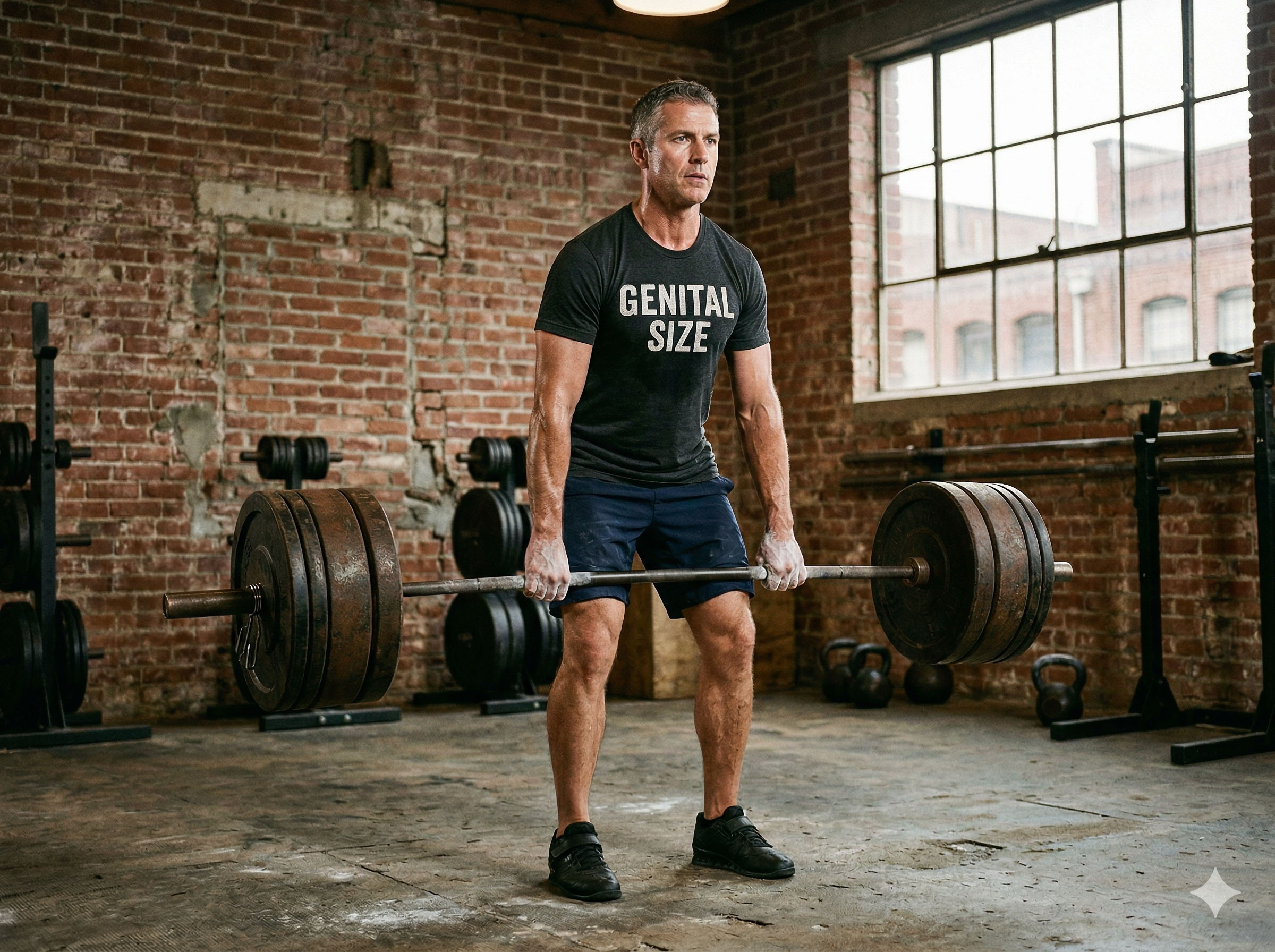
Resistance training is the most direct lever. Compound movements — deadlifts, squats, bench press, rows — produce an acute hormonal response that, over time, supports baseline testosterone. High-intensity interval training also shows benefits. Chronic cardio at steady moderate pace, while good for cardiovascular health, doesn't produce the same hormonal effect. Men who do only distance running often have lower testosterone than those who include strength work. That's not an argument against cardio — it's an argument for not skipping the weights.
Body fat matters more than most men want to hear. There's no kind way to say this: excess body fat, particularly visceral fat, actively works against your hormonal health. Reducing it — through consistent training and sustainable dietary habits — is one of the most effective hormonal interventions available without a clinic visit.
Diet carries real weight here. Dietary fat — particularly from whole food sources like eggs, red meat, olive oil, and nuts — is a precursor to testosterone synthesis. Chronically low-fat diets have been associated with lower testosterone. Zinc and vitamin D deficiencies are also well-established contributors to low T and are correctable through diet or supplementation. Men who are deficient in these — and many are — often see meaningful improvement when they address it.
Stress is a hormonal disruptor. Cortisol, the primary stress hormone, has an inversely competitive relationship with testosterone. Chronically elevated cortisol — driven by overwork, poor sleep, constant anxiety, and an inability to switch off — consistently suppresses T production. Managing stress isn't soft advice; it has a direct biochemical consequence for men who want to maintain hormonal health.
⚡ Did You Know?
Men who are deficient in Vitamin D — which includes an estimated 40% of adults in North America — consistently show lower testosterone levels in population studies. Getting your Vitamin D levels tested is one of the cheapest and most overlooked starting points for men concerned about hormonal health. Sun exposure, fatty fish, and D3 supplementation are common routes to correction.
Testosterone Replacement Therapy: The Real Conversation
TRT — testosterone replacement therapy — has become both more mainstream and more controversial in the past decade. In men's health forums it's treated as either a miracle or a scandal, neither of which is accurate. The reality is more measured.
For men with clinically confirmed low testosterone — typically defined as total T below 300 ng/dL combined with documented symptoms — TRT can produce meaningful improvements in energy, body composition, libido, mood, and cognitive function. The research supporting these outcomes in genuinely hypogonadal men is solid. This isn't bro-science.
TRT comes in several forms: weekly or twice-weekly injections (most common), daily gels or creams applied to the skin, and less commonly, pellets implanted under the skin. Each has trade-offs in terms of consistency of levels, convenience, and side effect profiles. Men on TRT require monitoring — bloodwork to track total testosterone, estradiol, red blood cell count (TRT can increase hematocrit), and other markers.
The concerns worth understanding honestly include: TRT suppresses the body's own production of testosterone (the testes receive a signal that T is no longer needed), which typically reduces sperm production and testicular size. For men who want to preserve fertility, this matters a great deal and alternative protocols exist. Exiting TRT also requires a managed process, as natural production needs time to recover. Men who start TRT should understand they may be committing to a long-term protocol.
What TRT is not is a shortcut to youth or performance that bypasses the need for healthy habits. It works best as a tool used by men who are already doing the lifestyle fundamentals and still falling short. It is not appropriate for men with normal T levels who want more, and responsible physicians won't prescribe it in those cases.
📋 TRT — What Men Ask Their Doctors
If you're considering a conversation with your physician about testosterone therapy, come prepared with these questions:
- What are my total testosterone, free testosterone, and estradiol levels?
- Is my LH and FSH normal? (Tests whether the issue is the testes or the pituitary.)
- What lifestyle changes should I try first before considering TRT?
- What are the monitoring requirements if I begin TRT?
- What are my options if I want to maintain fertility?
Mood, Identity, and the Psychological Weight of It All
There's a dimension to this conversation that gets less attention than the physical — and it's possibly the most important one for men in midlife. The psychological experience of hormonal change is real, and for many men it intersects uncomfortably with identity.
Masculinity, as most men have lived it, is tied to capacity. The ability to perform at work, to lead, to be physically capable, to show up for the people depending on you. When energy flags, when sexual function shifts, when the emotional thermostat becomes harder to regulate — men often experience these changes as personal failures rather than biological realities. That interpretation is both understandable and damaging.
The research on testosterone and mood regulation suggests the relationship is bidirectional. Low T contributes to irritability, anxiety, and depressed mood — but chronic psychological stress also suppresses T. This means men caught in difficult life circumstances (high-pressure work, relationship strain, financial stress) are often running their hormonal systems harder precisely when they're already depleted. The fog gets thick, and the way out isn't obvious.
What tends to help: honest conversations — with a physician, a partner, a trusted friend, or a therapist who doesn't pathologize normal male experience. Physical movement, even when motivation is low. Structure and purpose, which testosterone-depleted men often report as particularly missing. And a clear-eyed understanding that what they're experiencing has a physiological component — it isn't weakness, it's biology in need of attention.
Sexual Health in Midlife: The Part Men Don't Say Out Loud
Let's be direct about this. For many men, the most distressing symptom of hormonal decline isn't fatigue or muscle loss — it's what happens in the bedroom. Reduced libido, changes in erectile function, less intense orgasms, longer recovery times. These things happen, and they happen to men who are otherwise healthy, fit, and engaged in their lives.
Sexual function in men is influenced by testosterone, vascular health, nervous system function, and psychological state — all simultaneously. Low T contributes to reduced desire and can affect erectile function, but cardiovascular health matters enormously here too. Poor circulation, the early effects of metabolic syndrome, and endothelial dysfunction (impaired blood vessel function) are often the undetected culprits in men who assume everything is about testosterone.
This is why the lifestyle fundamentals aren't just about gym performance — cardiovascular fitness, healthy weight, not smoking, limiting alcohol, and managing blood pressure are directly tied to sexual health. The same habits that protect your heart protect your sexual function. They're not separate conversations.
Men who are experiencing changes in sexual function deserve honest, non-judgmental conversations with their doctors. These are medical matters, not character flaws. And the options available — from lifestyle adjustments to hormonal evaluation to medications to psychological support — are broader than many men realize because they've never asked.
🚀 Quick-Start: Hormonal Health for Men 40+
✅ Do
- Get bloodwork: total T, free T, estradiol, Vitamin D, zinc
- Prioritize 7–9 hours of quality sleep
- Train with weights 3–4x per week
- Eat adequate dietary fat and protein
- Manage stress with real strategies
- Reduce alcohol intake honestly
- Track body fat, not just weight
❌ Don't
- Assume "normal range" means optimal for you
- Self-medicate with unregulated products
- Skip the lifestyle work before seeking TRT
- Ignore mood and psychological symptoms
- Treat sexual health changes as inevitable and permanent
- Neglect cardiovascular health in the hormonal conversation
Tools worth knowing: DEXA scan for body composition, continuous glucose monitor for metabolic health insight, standard lipid panel, and a physician who takes male hormonal health seriously.
Redefining What Midlife Actually Looks Like
There's a version of midlife masculinity that culture has handed men for generations: quiet resignation. You slow down, you soften, you accept a smaller version of yourself. Maybe you buy a sports car instead. It's a script that doesn't serve anyone, and it's increasingly being rejected by men who are paying attention.
The men holding strong through their forties, fifties, and beyond — physically capable, mentally sharp, sexually engaged, emotionally grounded — are not all genetic outliers. Many of them made deliberate choices: they trained consistently when it wasn't convenient, they got their bloodwork done and acted on what it said, they didn't treat sleep as optional, they were honest with themselves about alcohol and stress. They understood that the body doesn't maintain itself, and they took that seriously before crisis forced their hand.
This isn't about fighting aging. Aging is not a fight you win. It's about the quality of the years, the function you carry into them, and the gap between what time naturally takes and what you give away unnecessarily. That gap is often larger than men realize — and much of it is within their influence.
Testosterone decline is real. Its effects are real. But it is not a sentence. It is a variable, and variables can be worked with. The man who takes an informed, proactive stance on his hormonal health at forty-two is going to have a very different experience at fifty-five than the man who didn't. Both will have aged. Only one will feel like he had a say in how.
❓ Your Questions Answered
Testosterone & Aging: Common Questions
The Bottom Line
Testosterone decline is not a crisis. It's a biological process — one that varies between men, one that lifestyle profoundly influences, and one that medicine can help manage when lifestyle alone isn't enough. The worst thing a man can do is ignore it, chalk it up to "just getting old," and accept a diminished version of himself that didn't have to be the outcome.
Get your bloodwork done. Take the sleep seriously. Train like your future health depends on it — because it does. Eat like an adult who gives a damn about his body. Have the honest conversations, with your doctor and with yourself. And understand that this phase of life, navigated with awareness and intention, doesn't have to be a retreat. It can be something more interesting: a man who actually knows himself, knows his body, and decided to show up for both.
That's not about recapturing youth. That's about earning the next decade.
Disclaimer: The articles and information provided by Genital Size are for informational and educational purposes only. This content is not intended to be a substitute for professional medical advice, diagnosis, or treatment. Always seek the advice of your physician or another qualified health provider with any questions you may have regarding a medical condition.


