

 日本語
日本語  Deutsch
  English
  Español
  Français
  Português
There is a specific kind of silence that hangs over a nation in decay. It isn’t the quiet of peace; it’s the heavy, suffocating stillness of a room where every man is holding his breath, waiting for the floorboards to give way. In Caracas, that silence lasted for over a decade. But on the night of January 3, 2026, that silence was finally shattered by the rhythmic thrum of rotors and the precise, overwhelming application of force.
We often look at men like Nicolás Maduro and ask the logical questions: Why stay? Why watch your currency turn into confetti? Why watch the men and women you lead flee across borders with nothing but the clothes on their backs? To the rational mind, the exit ramp is the only sane choice. But to a specific archetype of man—the one who has fused his pulse with the machinery of the state—stepping down isn’t just a political defeat. It is a form of ego-death.
The recent capture of Maduro in a US-led military operation in Caracas marks the end of a dark era. Now sitting in federal custody in New York City, the man who once held an entire nation hostage faces a reality he spent thirteen years trying to outrun. Understanding Maduro isn’t just a lesson in Latin American geopolitics; it is a study in the dark side of the masculine drive for dominance.
The Architecture of the Strongman
To understand how a former bus driver and union leader became the immovable object of the Caribbean, you have to understand the shadow of the man who came before him. Hugo Chávez was the sun around which Venezuela orbited, a charismatic force of nature who redefined the nation’s identity. When Maduro took the mantle in 2013, he didn’t just inherit a presidency; he inherited a ghost.
For many men, the pressure to live up to a predecessor—be it a father, a mentor, or a revolutionary icon—can be a driving force for greatness. But for Maduro, it became a blueprint for survival. He lacked Chávez’s organic connection to the masses, so he compensated with the only tool left in the kit: the iron fist.
The psychology of the dictator is rarely about "doing good" after the first few years. It becomes about the preservation of the self. When a man reaches a certain level of absolute power, the line between his own body and the state begins to blur. He no longer sees himself as a public servant; he sees himself as the embodiment of the nation. Therefore, any threat to his power is framed as a threat to the country’s existence. It is the ultimate narcissistic shield.
| Metric | Pre-Maduro Era | 2026 (At Capture) |
|---|---|---|
| GDP (Purchasing Power) | High (Oil Peak) | 75% Contraction |
| Daily Oil Production | ~3M Barrels | Under 700k Barrels |
| Migration Status | Net Inflow | 8M+ Displaced |
The Point of No Return: Why They Can’t Let Go
In the world of high-stakes power, there is a concept known as the "Dictator’s Dilemma." For a democratic leader, losing an election means a book deal, a speaking circuit, and a quiet retirement. For a man who has maintained power through the systematic dismantling of law and the use of state-sponsored force, there is no such thing as a quiet retirement.
For Maduro, the stakes were never merely political; they were existential. The moment he stepped off the throne, he was no longer the "President"; he was a man wanted by the international community. He was a man with a multi-million dollar bounty on his head for "narco-terrorism."
When we talk about men and the "will to power," we often frame it in terms of ambition. But at Maduro’s level, the driving force is fear. It is the fear of the cell, the fear of the gallows, or the fear of the very men and women he has suppressed for decades. This fear creates a feedback loop. To protect himself from the consequences of his past actions, he committed more actions that required him to stay in power. He was riding a tiger, and he knew that the moment he tried to dismount, he would be eaten.
"He is riding a tiger, and he knows that the moment he tries to dismount, he gets eaten."
The Destruction of the Village to Save the Chief
There is a fundamental tenet of healthy masculinity: the leader eats last. A true leader sacrifices his own comfort, and if necessary, his own status, for the wellbeing of the tribe.
Maduro represented the inversion of this principle. He oversaw a collapse that defies modern economic history. Venezuela, a country sitting on the world’s largest proven oil reserves, saw its GDP shrink by more than 75%. Millions of men and women suffered from malnutrition. The infrastructure—the literal bones of the country—turned to dust while the ruling elite grew fat on the spoils of illicit gold and narcotics.
Why would a man allow this? Because in the mind of the autocrat, a broken population is easier to manage than a prosperous one. When men and women are focused entirely on where their next meal is coming from, they have less energy to organize a revolution. By destroying the economy, Maduro effectively turned the state into the sole provider of survival. If you want the "CLAP" box (the government food rations), you must remain loyal. It was a hostage situation disguised as governance.
This is the ultimate betrayal of the masculine mandate. Instead of building a foundation upon which his people can thrive, he burned the fields so that he could remain the only man with a candle.
The Role of Force and the "Colectivos"
You cannot rule by decree alone. You need a physical manifestation of your will. In Venezuela, this took the form of the colectivos—armed civilian groups that act as the regime’s street-level enforcers.
There is something deeply revealing about how Maduro uses these groups. It is a tactical outsourcing of violence. By using these paramilitary units, he maintains a degree of plausible deniability while ensuring that the "average man" on the street knows that dissent carries a physical price.
History shows us that when a regime loses the ability to persuade, it must resort to the ability to punish. Maduro’s longevity is a testament to his understanding of the darker side of human nature: that most men, when faced with the choice between a principled death and a compromised life, will choose to survive. He has bet the house on the cowardice and exhaustion of his subjects.
The End of the Line: Detention and the Fall
Men like Maduro rarely walk away with a handshake. They are dragged away.
Imagine the transition: from the Miraflores Palace, surrounded by the opulence of stolen billions and the constant ego-stroking of sycophants, to a 6x9 cell in a U.S. federal facility. For a man who defined himself by his ability to command the lives of millions, the loss of agency in custody is the ultimate castration.
When we see images of former strongmen in court—think of Saddam Hussein or Slobodan Milošević—they often look remarkably small. Without the uniforms, the podiums, and the armed guards, they are revealed to be exactly what they always were: men who were terrified of their own insignificance.
The detention of such a figure is a moment of profound cultural catharsis. It is the reassertion of the rule of law over the rule of the whim. For the Venezuelan men who had to watch their children grow thin, and for the women who had to bury sons lost to state violence, seeing the "Strongman" in a jumpsuit is the first step toward reclaiming their own dignity.
The Fall: January 3, 2026
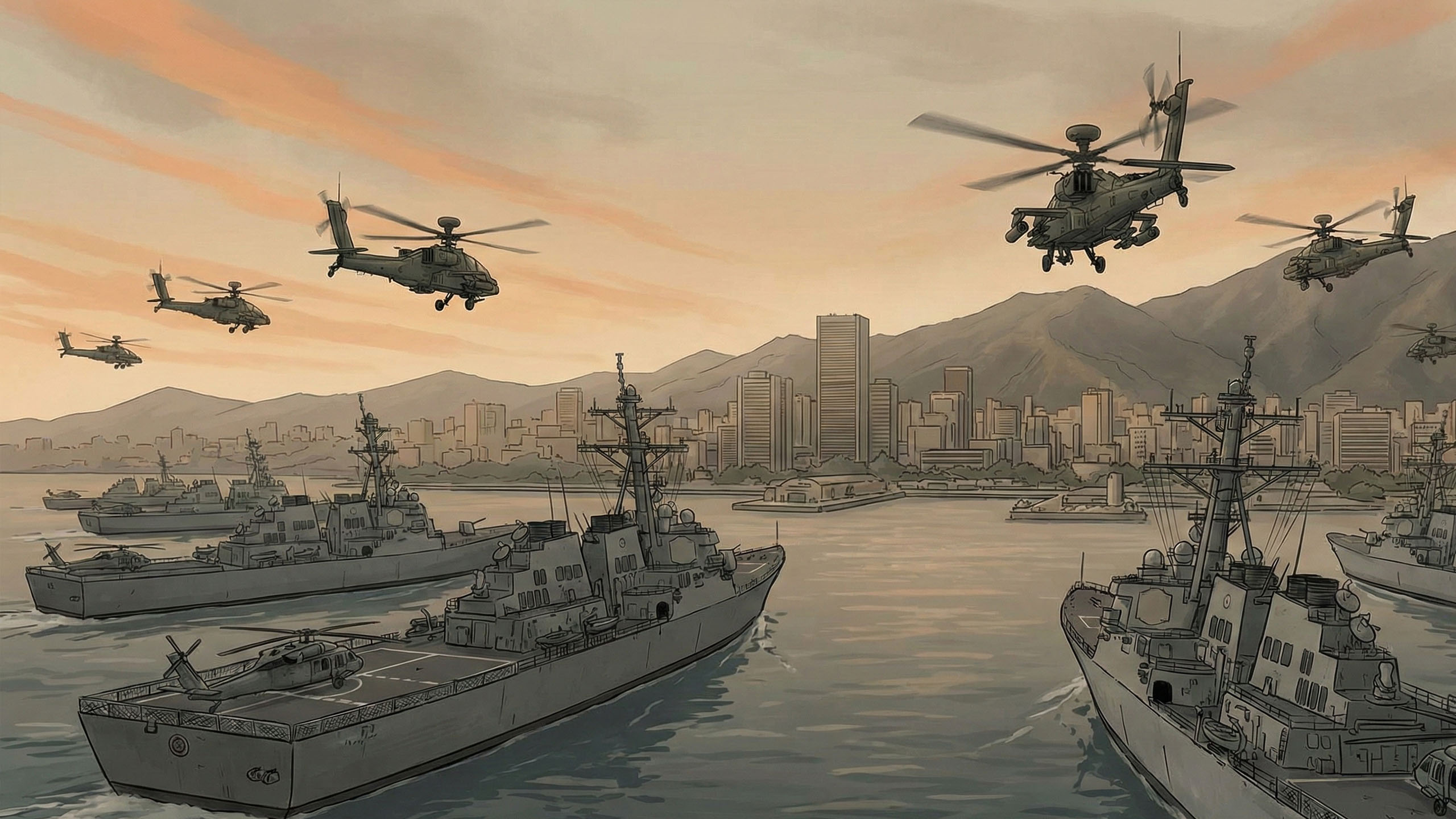
The climax of this decade-long tragedy occurred not with a popular uprising, but with a surgical strike. On January 3, 2026, the world woke to the news that Maduro had been captured during a high-stakes US-led military operation within the heart of Caracas.
The operation was the culmination of years of intelligence gathering and a tightening of the noose around the regime's inner circle. For years, Maduro had played a game of cat and mouse, hiding behind layers of security and the colectivos—armed civilian groups that acted as his street-level enforcers. But when the end came, it was swift.
The image of Maduro being transported to the United States and taken into federal custody in New York City serves as a powerful symbol. The man who once thundered from podiums about "imperialist threats" now sits in a city that represents the very system he claimed to despise. For the Venezuelan men who had to watch their children grow thin, and for the women who had to bury sons lost to state violence, seeing the "Strongman" in custody is more than just news; it is a long-overdue accounting.
Before his capture, the U.S. State Department had issued a $50 million reward for information leading to Maduro's arrest. This remains one of the highest bounties ever placed on a world leader in modern history.
The Reality of the Cell
There is something deeply revealing about the transition from a palace to a prison. History shows us that when a regime loses the ability to persuade, it must resort to the ability to punish. Maduro’s longevity was a testament to his understanding of the darker side of human nature: that most men, when faced with the choice between a principled death and a compromised life, will choose to survive.
But in a 6x9 cell in New York, that power evaporates. For a man who defined himself by his ability to command the lives of millions, the loss of agency in custody is the ultimate castration. Without the uniforms, the podiums, and the armed guards, these figures are revealed to be exactly what they always were: men who were terrified of their own insignificance.
The detention of such a figure is a moment of profound cultural catharsis. It is the reassertion of the rule of law over the rule of the whim. It proves that no man—regardless of his title or the size of his military—is truly untouchable.
The Lesson for the Modern Man
Why do we tell this story? Because the "Maduro Path" is a cautionary tale for any man in a position of authority, whether he is leading a country, a company, or a family.
- The Danger of the Echo Chamber: Maduro surrounded himself with "yes-men" who reinforced his delusions. A man who cannot handle criticism is a man who is destined to fail.
- Power as a Means, Not an End: When power becomes the goal rather than the tool to achieve a greater good, it becomes a poison.
- The Weight of Legacy: Every man wants to be remembered. But there is a difference between being remembered as a builder and being remembered as a warden.
Maduro’s willingness to destroy his nation is the final proof that he never truly loved it. He loved the way he felt when he stood at the center of it. He mistook the crown for the head.
The Reckoning: FAQ
The Road Ahead
The story of Venezuela is finally entering a new chapter. The resilience of its men and women, despite the weight of thirteen years of oppression, is a testament to the human spirit’s refusal to be permanently broken.
As Maduro awaits trial in New York, the "Bus Driver" has finally reached the end of the route. There are no more stops. There is only the reckoning.
We watch these events not just as political observers, but as men who understand that true strength is not found in the ability to crush others, but in the discipline to govern oneself. The fall of a dictator is a reminder that while force can win a day, it cannot sustain a century. In the end, the truth—and the people—have a way of outlasting the tyrant.
Disclaimer: The articles and information provided by Genital Size are for informational and educational purposes only. This content is not intended to be a substitute for professional medical advice, diagnosis, or treatment. Always seek the advice of your physician or another qualified health provider with any questions you may have regarding a medical condition.