


 日本語
日本語  Deutsch
  English
  Español
  Français
  Português
The spreadsheet looks flawless. You have your macronutrient ratios dialed in to the gram, your meal prep containers are stacked like cordwood in the fridge, and your caloric deficit is calculated with the precision of a structural engineer.
On paper, you are a machine. On paper, you are destined for the lean, rugged physique of a man who can handle himself in the wild and in the boardroom.
Then, Tuesday afternoon hits.
The stress of a looming deadline tightens your chest. You’ve been up since 5:00 AM, you’ve hit the squat rack, and suddenly, that 4-ounce chicken breast and half-cup of brown rice looks less like "fuel" and more like an insult. By 8:00 PM, after a long commute and a house full of noise, the discipline snaps. You aren’t just hungry; you are biologically and psychologically hollow.
Most performance diets fail because they treat the human metabolism like a closed thermodynamic system—a simple furnace where you toss in fuel and get heat. But a man is not a furnace. He is a biological entity with a deep-seated ancestral drive, a complex hormonal profile, and a cultural identity tied to the act of providing and consuming. When we ignore the reality of human appetite, we don't just lose the diet; we lose our edge.
The Spreadsheet vs. The Stomach
The modern fitness industry is obsessed with "optimization." We’ve been sold the idea that if we can just track enough metrics—heart rate variability, blood glucose, sleep cycles—we can bypass the messy reality of being a man. This is the "Optimization Trap." It posits that hunger is simply an error message to be ignored or a glitch in the software.
However, hunger is one of the most powerful survival mechanisms ever forged. For our ancestors, hunger was the signal to sharpen the spear. It was the physical manifestation of the "Provider" instinct. When a performance diet asks you to live in a state of chronic, low-grade starvation while maintaining high-output physical labor, it isn't just asking for discipline; it’s asking you to fight your own DNA.
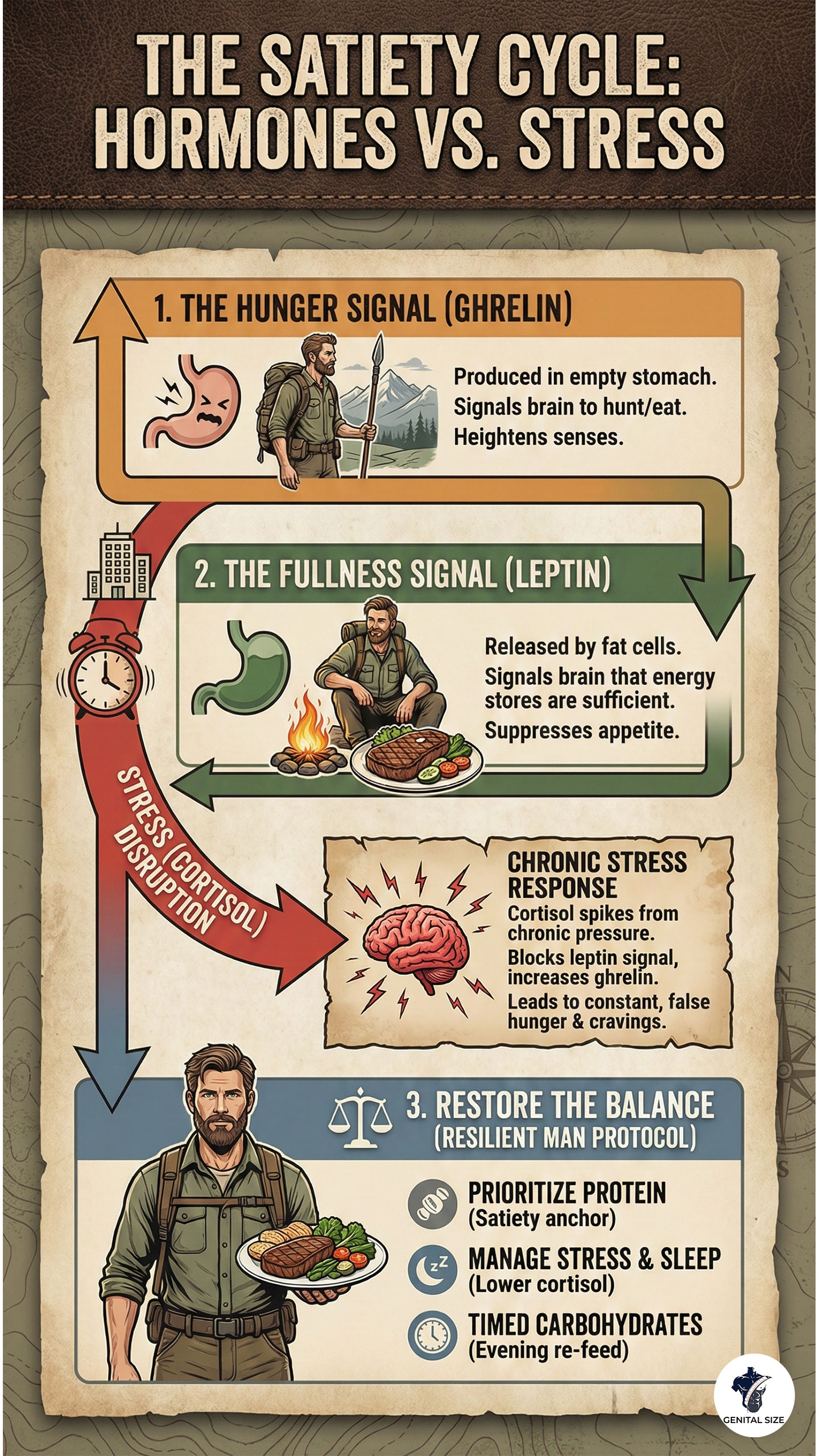
The biological reality is governed by hormones like ghrelin (the hunger signal) and leptin (the fullness signal). When you cut calories too sharply or eliminate entire food groups, your body doesn't think you’re trying to see your abs for beach season. It thinks the hunt failed. It thinks the tribe is in danger. In response, it throttles your metabolism and cranks up your appetite until you become a liability to your own goals.
"A man is not a furnace; he is a biological entity with an ancestral drive to provide, protect, and consume."
The Myth of the "Clean" Eater
We’ve created a moral hierarchy around food that doesn't exist in nature. "Clean" eating has become a badge of honor, often characterized by bland, repetitive meals that lack the sensory satisfaction necessary for long-term adherence.
For a man who views himself as a provider—someone who works hard to put food on the table—the act of eating should be a reward, not a chore. There is a psychological cost to eating out of a plastic container while your family enjoys a home-cooked meal. When a diet ignores the cultural and social importance of breaking bread, it creates a sense of isolation.
Traditional masculinity is built on strength and utility. A man needs to be fueled to protect, to build, and to lead. If your diet leaves you irritable, brain-fogged, and physically weak, it is failing its primary objective. A performance diet that ignores appetite is essentially a form of self-imposed frailty.
The Role of Testosterone and Metabolism
For men, metabolism is inextricably linked to hormonal health. Chronic undereating—especially the avoidance of healthy fats—can lead to a slide in testosterone levels.
- Fats and Hormones: Cholesterol is a precursor to testosterone. Diets that are too lean can inadvertently sabotage a man’s drive and muscle-building potential.
- Stress Response: High-intensity training combined with extreme caloric restriction spikes cortisol. High cortisol is the enemy of the lean, powerful physique, often leading to fat storage around the midsection—the very thing most men are trying to avoid.
Stress: The Silent Macro
Most diet plans assume you live in a vacuum. They don’t account for the 10-hour workday, the mortgage, or the demands of raising children. Stress is a metabolic variable that cannot be ignored.
When you are under pressure, your body craves energy-dense foods. This isn't "weakness"; it’s a biological response to perceived threat. The brain consumes a massive amount of glucose when it’s under cognitive load. If you are trying to navigate a high-stakes negotiation on a "zero-carb" protocol, your brain will eventually demand a massive influx of sugar to keep the lights on.
Instead of fighting this reality, a successful performance plan must integrate it. We need to move away from "all-or-nothing" mentalities and toward a "Resilient Nutrition" framework. This means acknowledging that some days will require more fuel than others. It means understanding that appetite is a fluctuating signal, not a constant.
The Ancestral Template: Eating Like a Provider
If we look back at the most successful male archetypes—the hunter, the explorer, the laborer—we don't see men who counted every almond. We see men who understood the cycle of effort and reward.
They worked hard, often in a fasted or semi-fasted state, and then they ate heartily. This "Pulse" method of eating aligns more closely with our biology. It allows for periods of high focus and physical output, followed by a period of recovery and satiety.
Why Satiety Matters More Than Calories
If you want to stay lean and perform at a high level, you have to prioritize satiety. This is the feeling of being "done." It is the signal to the brain that the hunt was successful and the body can relax.
- Protein Dominance: Protein is the most satiating macronutrient. A man should build every meal around a solid source of animal protein. It’s not just about muscle; it’s about telling your brain you aren't starving.
- Volume and Texture: Crunch, heat, and volume matter. A handful of pills and a protein shake will never satisfy a man's appetite like a seared steak and a pile of roasted vegetables.
- The "20% Rule": Give yourself room for the cultural realities of being a man. If you can’t have a beer with your father or a slice of pizza with your kids without "ruining" your progress, your plan is too fragile for real life.
Performance is More Than a Number
We have to ask ourselves: What are we performing for?
If the goal is to look good in a mirror but feel miserable in your skin, that isn't performance—that’s vanity. Real performance is the ability to show up for your responsibilities with energy and a clear head. It’s having the strength to carry the heavy load, literally and figuratively.
The "Real Human Appetite" isn't a hurdle to be jumped; it’s the engine that drives us. When we stop viewing our hunger as an enemy and start viewing it as a tool for regulation, we unlock a level of consistency that no spreadsheet can provide.
From Theory to the Field: The Resilient Man Protocol
Understanding the biological imperative of hunger is only half the battle. To lead, provide, and perform, a man requires a strategy that survives contact with reality. We don't just need a "diet"—we need a tactical fueling framework that respects our hormonal cycles and the demands of a high-stakes life.
We build this on Metabolic Flexibility: teaching your body to burn fat for fuel during the workday while using targeted carbohydrates to power through high-intensity training and ensure deep, restorative sleep.
Core Principles
- The Anchor: Every meal starts with 30-50g of high-quality animal protein (beef, eggs, chicken, fish).
- The Daylight Window: Keep carbs low during the working day to maintain sharp cognitive focus and stable blood sugar.
- The Evening Re-Feed: Consume the majority of your carbohydrates at dinner. This lowers cortisol, triggers serotonin, and helps you sleep—preparing you for the next day's battle.
| Day | Focus | Primary Fuel Source | Training Type |
|---|---|---|---|
| Monday | High Output | Protein + Moderate Carbs | Heavy Lifting (Lower Body) |
| Tuesday | Cognitive Focus | Protein + Healthy Fats | Active Recovery / Walk |
| Wednesday | Mid-Week Push | Protein + Moderate Carbs | Upper Body Strength |
| Thursday | Metabolic Reset | Protein + High Fats | Zone 2 Cardio (Endurance) |
| Friday | Peak Performance | Protein + Higher Carbs | Full Body / Functional |
| Saturday | The Provider Day | Whole Food Feast | Outdoor Activity / Labor |
| Sunday | Recovery | Protein + Nutrient Dense | Rest / Mobility |
The Resilient Loadout: Quick Start
- Cast Iron Skillet (for searing)
- Digital Meat Thermometer
- High-Quality Sea Salt
- Prioritize 1g of protein per lb of bodyweight.
- Eat until 80% full during the day.
- Don't drink your calories (shakes aren't meals).
- Don't fear animal fats.
Strategic Meal Structure
1. The Power Breakfast (07:00 - 08:30)
Most men fail by eating a high-carb breakfast that leads to an 11:00 AM crash. We want a "Slow Burn" start.
- The Meal: 4 Whole eggs, 1/2 avocado, and a side of smoked salmon or lean steak.
- The Benefit: High leucine for muscle protein synthesis and healthy fats for sustained brain power.
2. The Executive Lunch (12:00 - 13:30)
Lunch should be functional. It needs to satisfy your hunger without making you want to nap during the afternoon meeting.
- The Meal: Large green salad or roasted cruciferous vegetables topped with 6-8oz of grilled chicken or canned sardines. Use olive oil as the primary dressing.
- The Benefit: High volume keeps the stomach full (satiety) while the absence of heavy starches keeps insulin low and mental clarity high.
3. The Performance Dinner (18:30 - 20:00)
This is where we reward the body for the day's labor.
- The Meal: 8-10oz Grass-fed ribeye or wild-caught salmon, a double serving of white rice or sweet potato, and seasonal greens.
- The Benefit: The carbohydrates replenish muscle glycogen used during your workout and help transition your nervous system from "Fight or Flight" to "Rest and Digest."
Handling the "Real Life" Variables
The Stress Spike
If you have a high-cortisol day where everything goes wrong, your appetite will scream for sugar. Instead of reaching for a donut, reach for Salt and Hydration. Often, the "hunger" we feel under stress is actually a demand for electrolytes. Drink 16oz of water with a pinch of sea salt before deciding to deviate from the plan.
The Social Provision
If you are at a business dinner or a family gathering, follow the Protein-First Rule. Eat your serving of meat and vegetables before touching the bread basket. By the time you get to the "temptation" foods, your satiety hormones (PYY and GLP-1) will already be signaling your brain that the hunt was successful.
Tactical Supplementation
- Magnesium Glycinate: Take before bed to assist with muscle relaxation and recovery.
- Vitamin D3/K2: Essential for hormonal health, especially for men working indoor jobs.
- Creatine Monohydrate: The most researched supplement for both physical strength and cognitive resilience.
Common Performance Questions
Moving Forward: The 3-Week Challenge
A diet shouldn't be a life sentence; it should be a training camp. I recommend following this "Resilient" framework strictly for 21 days. This is long enough to reset your taste buds and stabilize your insulin sensitivity, but short enough to feel manageable.
Disclaimer: The articles and information provided by Genital Size are for informational and educational purposes only. This content is not intended to be a substitute for professional medical advice, diagnosis, or treatment. Always seek the advice of your physician or another qualified health provider with any questions you may have regarding a medical condition.