



 日本語
日本語  Deutsch
  English
  Español
  Français
  Português
The modern man is expected to be a polymath of performance. In a single day, you are required to be a decisive leader at work, a focused strategist in your financial life, and a grounded, present protector for your family.
The stakes are high, and the noise is constant. We live in an era of digital fragmentation, where every notification is a calculated raid on your cognitive reserves.
For the man who views himself as a provider, the most critical tool in his arsenal isn't his truck, his bank account, or his physical strength—it is his ability to direct his attention. If you cannot control your mind, you cannot control your environment.
In recent years, "mindfulness" has been marketed through a lens of soft aesthetics and passive relaxation. But for the neuroscientist and the high-performer, mindfulness is something entirely different. It is a tactical drill for the brain. It is the practice of sharpening the blade of focus so that when the time comes to strike—whether in a boardroom or a crisis—the cut is clean.
The Neural Architecture of the Disciplined Mind
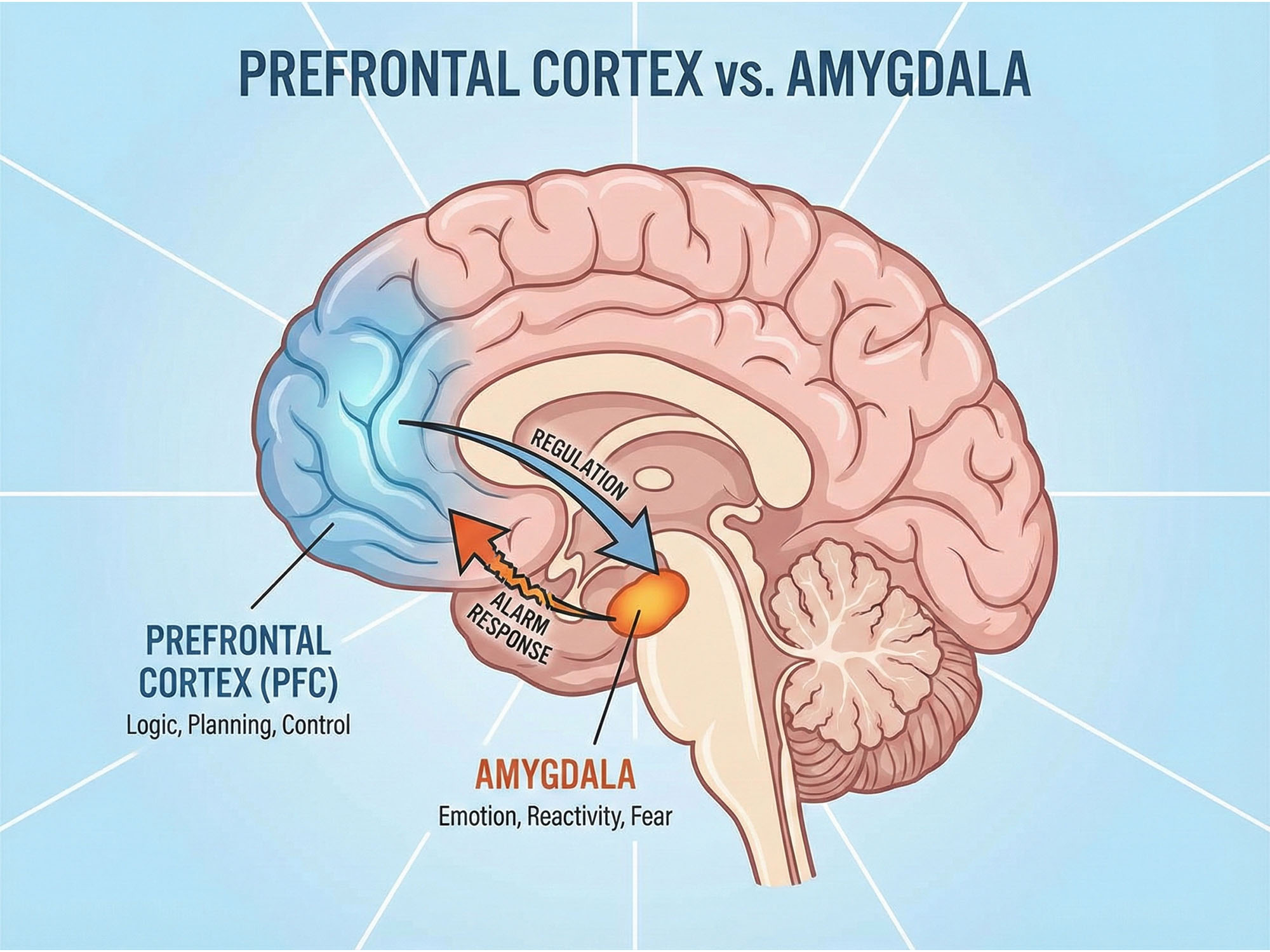
To understand how to master focus, we have to look under the hood. The human brain is a battlefield between two primary systems: the Prefrontal Cortex (PFC) and the Amygdala.
The PFC is your executive command center. It handles logic, long-term planning, and impulse control. It is the "Captain" of the ship. The Amygdala, conversely, is an ancient, reactive alarm system. It scans for threats and triggers the "fight or flight" response. In our ancestors, this saved lives. In the modern man, it often manifests as a low-grade, persistent anxiety that scatters focus and leads to reactive, rather than proactive, decision-making.
Neuroscientists have discovered that consistent mindfulness practice—specifically focused-attention training—actually changes the physical structure of these regions. This isn't "feeling" better; it is neuroplasticity in action.
-
Cortical Thickening: Research shows that regular practitioners develop a thicker Prefrontal Cortex. You are quite literally building a bigger "muscle" for willpower.
-
Amygdala Shrinkage: Conversely, the gray matter density in the amygdala often decreases. This doesn't mean you lose your edge; it means your "alarm" becomes more precise. You stop reacting to the trivial and save your intensity for what actually matters.
The Science of "Top-Down" Control
When a man is distracted, he is operating in a "bottom-up" fashion. His environment is telling his brain what to think about. A notification pings, a coworker interrupts, a doubt creeps in, and his focus shatters.
Mindfulness flips the switch to "top-down" control. It trains the PFC to inhibit the distractions of the lower brain. For a provider, this is the difference between being a leaf in the wind and being the rock in the stream.
The Neurological Shift: Reactive vs. Proactive
| Feature | The Reactive Mind (High Amygdala) | The Focused Mind (High PFC) |
|---|---|---|
| Decision Making | Impulsive, fear-based | Calculated, long-term oriented |
| Stress Response | Tunnel vision, cortisol spikes | Situational awareness, vagal tone |
| Attention | Fragile, easily distracted | Resilient, laser-focused |
Mindfulness as Tactical Training
If you want to shoot accurately, you spend time on the range. If you want to lift heavy, you spend time under the bar. If you want a mind that doesn't buckle under pressure, you must train the "observer" function of your consciousness.
Neuroscience defines mindfulness as non-judgmental awareness of the present moment. For our purposes, let’s strip away the fluff: it is the ability to recognize you are being distracted and to return to your objective without emotional volatility.
The Mechanism of the Return
Most men quit mindfulness because they think they "can't clear their heads." They sit down, try to focus on their breath, and immediately start thinking about a project deadline or a mortgage payment. They feel they’ve failed.
In reality, the moment you realize you are distracted is the moment the training happens.
Think of it like a bicep curl. The "distraction" is the weight going down; the "return to focus" is the contraction. Every time you catch your mind wandering and pull it back to your breath or your task, you are performing a mental rep. The goal isn't to have a blank mind; the goal is to become the master of where your mind goes.
"The ability to bring back a wandering attention over and over again is the very root of judgment, character, and will." — William James, Father of American Psychology.
Performance Under Fire: Stress and the Masculine Role
A man's value is often measured by his steadiness in a storm. Whether it’s a market downturn or a family emergency, men are expected to be the "Point Man." However, chronic stress releases cortisol, which, over time, acts like acid on the neural pathways of the Prefrontal Cortex.
When cortisol levels are high, your "working memory"—the mental scratchpad you use to solve complex problems—shrinks. You become stupider, more impulsive, and more prone to anger.
The Vagus Nerve and the "Reset" Button
Neuroscientists point to the Vagus Nerve as the physical bridge between the mind and the body's stress response. It is the main component of the parasympathetic nervous system. By using specific breathing techniques associated with mindfulness, a man can manually "hack" his nervous system to lower his heart rate and clear the cortisol from his system.
This isn't about being "calm" for the sake of it. It’s about maintaining situational awareness. A panicked man has tunnel vision. A focused man sees the whole field. By training the mind to remain present, you maintain the "wide-angle lens" necessary to provide and protect effectively.
Implementing the Protocol: A Man’s Guide to Mental Clarity
We don't do things because they feel good; we do them because they work. To integrate these neuroscientific findings into a high-performance lifestyle, you need a protocol that is efficient and results-oriented.
1. The Morning Audit (10 Minutes)
Before you touch your phone—before you let the world's demands dictate your internal state—sit in a chair, feet flat on the floor.
-
The Drill: Focus entirely on the sensation of air entering and leaving your nostrils.
-
The Conflict: Your mind will fight you. It will list chores, anxieties, and ideas.
-
The Victory: Each time you notice the thought, acknowledge it like a blip on a radar, and return to the breath. You are calibrating your "Command Center" for the day.
2. Radical Task Monotasking
The "multitasking" myth is one of the greatest detractors of masculine performance. Neuroscience shows that the brain does not multitask; it "context switches," and each switch carries a "switching cost" that lowers IQ and increases errors.
-
The Protocol: When you are working, work. When you are with your wife and children, be with them. Use your trained focus to build a "firewall" around your current task.
3. The "Gap" Technique
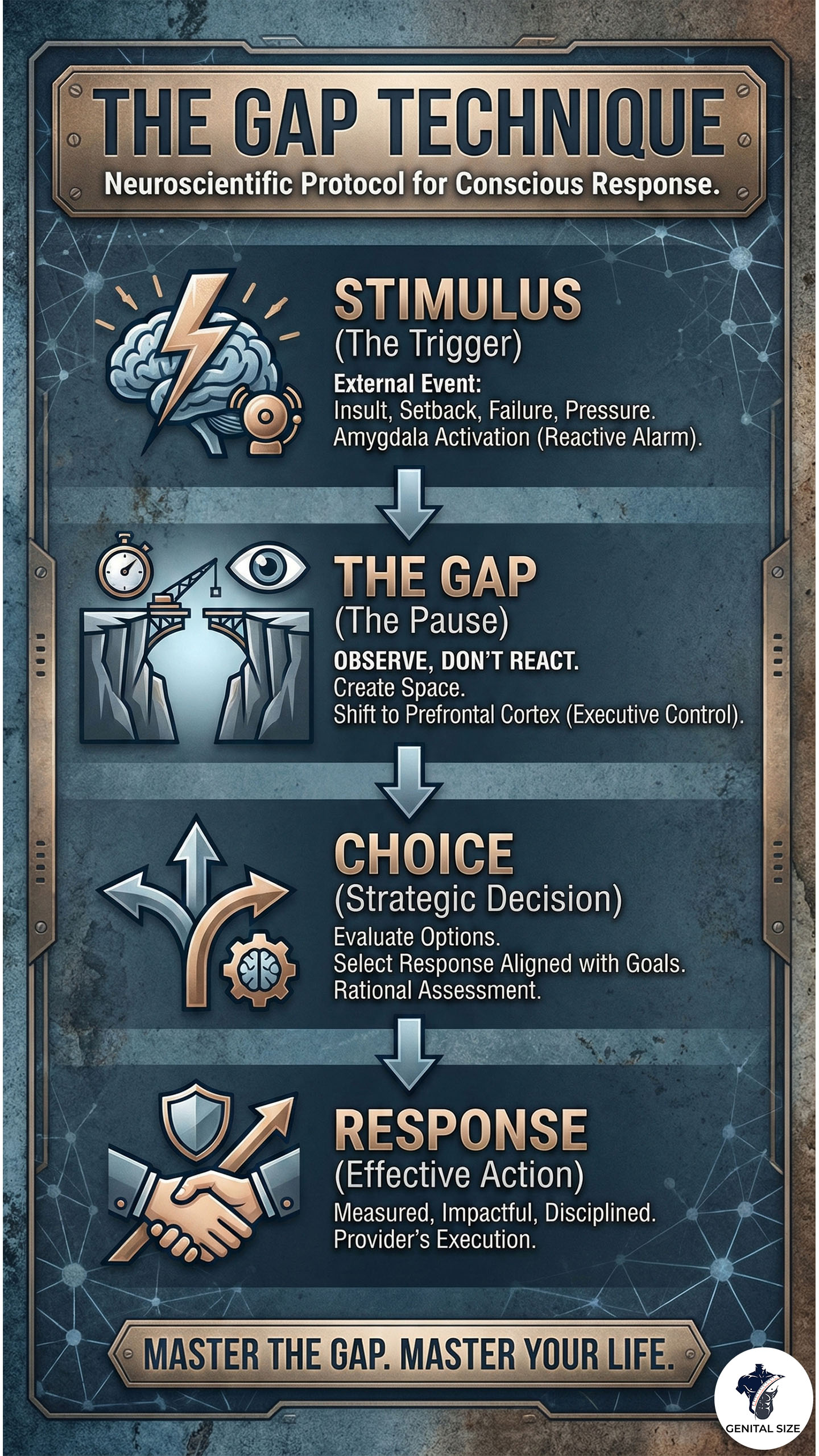
In the space between a stimulus (an insult, a setback, a failure) and your response, there is a gap. The disciplined man lives in that gap.
-
The Drill: When you feel a surge of irritation or pressure, pause for two seconds. Observe the physical sensation in your body. By observing it, you move the activity from the reactive Amygdala to the rational PFC. You choose your response rather than being a slave to your biology.
Mental Command: Quick-Start
Tools: A quiet chair, a stopwatch, and zero notifications.
Do:
- Start small (5-10 mins).
- Embrace the distraction.
- Focus on the physical sensation.
Don't:
- Wait for "peace and quiet."
- Judge your wandering mind.
- Check your phone immediately after.
The Provider’s Edge: Why This Matters for the Long Game
We live in a world that is increasingly chaotic. The traditional roles of men—to build, to lead, and to provide—require a level of mental fortitude that the average environment does not support.
A man who practices mindfulness is not "checking out" of the world. He is checking in with more intensity. He is more aware of his wife’s needs because he isn't distracted by his phone. He is more effective in his business because he isn't paralyzed by the fear of future failure. He is more capable in his physical pursuits because he can endure discomfort without the mind screaming for a way out.
The Biology of Presence
Women and children are biologically attuned to the presence of the men in their lives. A man who is physically present but mentally elsewhere—anxious, scrolling, or ruminating—creates an environment of instability.
Neuroscience suggests that our "mirror neurons" allow others to pick up on our internal state. If the leader of the household is grounded and focused, the household follows suit. This is the "Adventurous Provider" in his truest form: the man who has conquered his internal world so that he may better serve his external one.
Focus FAQ for High Performers
The New Frontier of Strength
Strength used to be defined solely by the output of a man's muscles. In the 21st century, strength is defined by the output of his mind. We have the data, the brain scans, and the neurological proof that the ancient practices of focus and presence are the ultimate performance enhancers.
This isn't about finding "inner peace" in a vacuum. It is about becoming a more formidable version of yourself. It is about ensuring that when your family, your company, or your community looks to you for direction, they find a man whose eyes are clear, whose mind is steady, and whose focus is unbreakable.
The brain is the ultimate frontier. Treat it with the same discipline you apply to your body and your business. Train the mind, and the rest will follow.
Disclaimer: The articles and information provided by Genital Size are for informational and educational purposes only. This content is not intended to be a substitute for professional medical advice, diagnosis, or treatment. Always seek the advice of your physician or another qualified health provider with any questions you may have regarding a medical condition.