


 日本語
日本語  Deutsch
  English
  Español
  Français
  Português
There’s a particular kind of frustration that only men who train understand. You clean up your diet, tighten your schedule, maybe even cut back on beer and late nights. The scale finally starts moving in the right direction—but the mirror tells a different story. Your arms look flatter. Your chest feels softer. Strength numbers slip. You didn’t just lose weight. You lost something that took years to build.
Muscle loss during weight loss isn’t a moral failure or a lack of discipline. It’s biology responding to stress. Your body doesn’t care whether you’re cutting for summer, rehabbing an old injury, or trying to stay sharp into your forties. When calories drop and recovery slips, it makes decisions based on survival, not aesthetics.
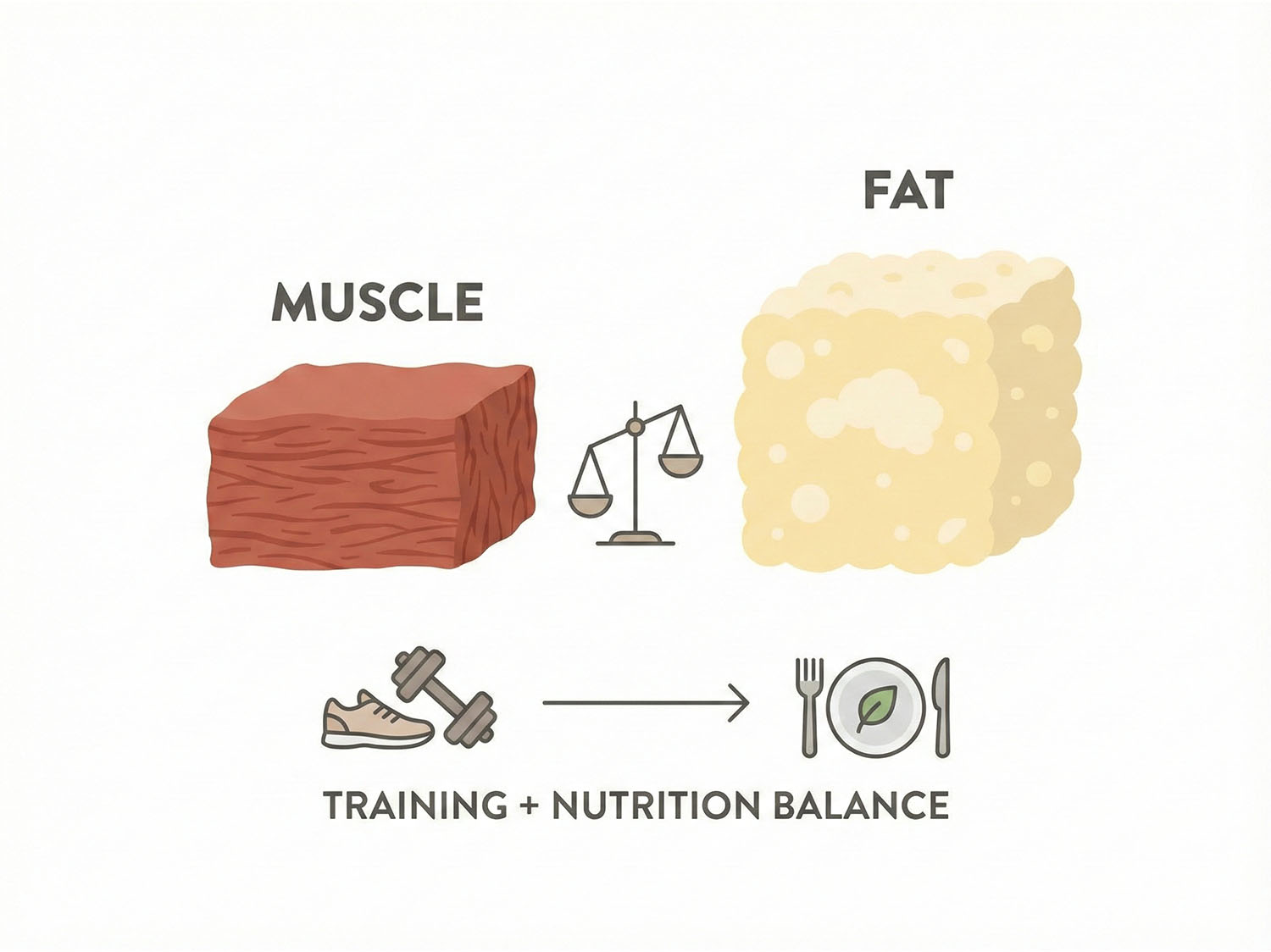
The good news: losing fat without sacrificing muscle is not only possible—it’s repeatable. But it requires a different mindset than crash dieting or grinding cardio. This is about strategy, restraint, and respect for how the male body actually works.
This is not a shortcut. It’s a field manual.
Quick-Start: Lose Fat, Keep Muscle
- Calories: Moderate deficit, not extreme
- Protein: High and consistent
- Training: Heavy lifts, reduced volume
- Sleep: 7–8 hours minimum
- Don’t: Replace weights with endless cardio
The Real Enemy Isn’t Fat—It’s Mismanaged Stress
Most men approach fat loss like a fight that can be won by aggression. Fewer calories. More workouts. Less rest. That approach works for about two weeks, and then everything stalls—or worse, unravels.
Muscle is metabolically expensive tissue. When stress piles up—from calorie restriction, poor sleep, excessive cardio, work pressure, or under-recovery—your body looks for ways to cut costs. Muscle is often first on the list.
Cortisol rises. Testosterone dips. Thyroid output slows. Training feels heavier than it should. Appetite becomes unpredictable. You start negotiating with yourself.
This is why weight loss plans that ignore recovery fail men long-term. Fat loss is not about punishment. It’s about maintaining a signal to your body that muscle is still necessary.
Eat Less, But Not Recklessly
The single biggest mistake men make during fat loss is cutting calories too aggressively.
Yes, a calorie deficit is required to lose fat. No, that does not mean eating like a bird. When calories drop too far, protein synthesis falls, training quality suffers, and muscle breakdown accelerates.
A sustainable deficit for most active men sits around 300–500 calories below maintenance. That might feel conservative, especially if you’re used to dramatic cuts, but it’s the range where fat loss happens without triggering muscle loss alarms.
You should still feel capable of training hard. You should still recover between sessions. Hunger should be present, but manageable—not obsessive.
If your lifts are collapsing and your mood is tanking, you didn’t “lack discipline.” You overshot the deficit.
Muscle-Preserving Fat Loss: What to Do vs What to Avoid
| Do This | Avoid This |
|---|---|
| Moderate calorie deficit (300–500 kcal) | Extreme crash dieting |
| Lift heavy compound movements | Replacing weights with excessive cardio |
| High protein intake | Low-protein “cutting” plans |
| Prioritize sleep and recovery | Ignoring fatigue signals |
Protein Is Non-Negotiable
Protein is the raw material that keeps muscle on your frame. During weight loss, your protein needs go up, not down.
For most men cutting fat while training, 0.7–1.0 grams of protein per pound of lean body mass is a reliable target. That usually translates to 0.8–1.0 grams per pound of bodyweight for leaner men, slightly less for those carrying more fat.
This isn’t about bodybuilding obsession. It’s about preserving tissue that defines strength, posture, and metabolic health.
Protein also helps regulate appetite. It stabilizes blood sugar. It supports recovery. If fat loss is the mission, protein is the foundation.
And no—you don’t need exotic powders or designer supplements. Meat, eggs, dairy, fish, and simple whole-food sources still do the job.
Lift Heavy, Even When Cutting
Cultural Insight
For most of history, strength—not leanness—defined male capability. Modern fat-loss culture often prioritizes thinness over function, a shift that clashes with how men traditionally measure health and readiness.
One of the fastest ways to lose muscle is to stop giving your body a reason to keep it.
When men replace strength training with endless cardio during fat loss, they send a clear message: muscle is optional. The body listens.
You don’t need maximal volume, but you do need intensity. Heavy compound lifts—squats, presses, pulls, hinges—signal muscle retention. They tell your nervous system that strength still matters.
Expect some performance drop during a cut. That’s normal. What you’re guarding against is a collapse, not a slight dip.
A good rule: keep the weight heavy, reduce the volume slightly. Fewer sets, same intent. Train with purpose, not fatigue.
Cardio has its place, but it should support fat loss, not replace resistance training. Walking, sled work, light conditioning—these burn calories without eating into recovery.
Carbs Are Not the Villain—Timing Matters
Low-carb approaches work for some men, especially those who are insulin resistant or sedentary. But for men training hard, completely cutting carbs often backfires.
Carbohydrates fuel performance. They support thyroid function. They help regulate cortisol. When carbs drop too low, training intensity drops with them.
The smarter move is carb timing, not elimination.
Place carbs around training sessions—before and after lifting. Keep them lower on rest days. This supports performance while still maintaining a calorie deficit.
Men who lift heavy and eat zero carbs often mistake fatigue for fat loss progress. It’s not the same thing.
Sleep Is a Fat Loss Multiplier
You can eat perfectly and train intelligently, but if you sleep like garbage, muscle loss becomes far more likely.
Sleep deprivation increases cortisol, reduces testosterone, and disrupts insulin sensitivity. Appetite regulation suffers. Recovery slows. Fat loss becomes harder, not easier.
Seven to eight hours is not a luxury—it’s baseline maintenance for men trying to get lean without shrinking.
If your schedule is brutal, protect sleep like training time. Dark room. Cool temperature. Consistent schedule when possible. Fewer late-night screens.
No supplement replaces sleep. Not even close.
Testosterone: The Silent Partner in Body Composition
Testosterone isn’t just about libido or aggression. It plays a central role in muscle retention, fat distribution, and motivation.
Extreme dieting, excessive endurance training, chronic stress, and poor sleep all suppress testosterone. This is one reason men feel flat, irritable, and weaker during poorly planned cuts.
Supporting testosterone doesn’t require extreme measures. It requires fundamentals:
-
Adequate calories
-
Sufficient dietary fat
-
Heavy resistance training
-
Quality sleep
-
Managing stress outside the gym
When these are in place, your hormonal environment supports fat loss instead of fighting it.
“Muscle stays when it’s fed, trained, and respected. Fat leaves when the environment is right.”
Weight Loss Is Not Linear—And That’s Fine
Men often sabotage themselves by expecting the scale to drop every week. When it doesn’t, they panic and cut harder.
Fat loss doesn’t move in straight lines. Water retention, glycogen shifts, inflammation from training—all can mask fat loss temporarily.
The mirror, performance, and measurements matter more than the scale alone.
If strength is mostly intact, waist measurements are trending down, and you feel capable in training, you’re likely doing it right—even if the scale stalls for a week or two.
Patience preserves muscle. Panic destroys it.
The Cultural Pressure to Be Smaller
There’s a quiet message aimed at men today: leaner is always better. Smaller waist. Less bulk. Less presence.
But many men don’t actually want to be smaller. They want to be sharper, healthier, and more capable without losing the physical identity they’ve built.
Muscle isn’t vanity. It’s armor. It supports joints, stabilizes hormones, and reinforces confidence. Losing it unnecessarily is not progress.
The goal isn’t to disappear. It’s to refine.
Fat Loss After 35: Adjust Expectations, Not Effort
As men age, recovery slows slightly. Hormonal peaks soften. Stress accumulates from work, family, and responsibility.
This doesn’t mean fat loss is off the table. It means recklessness is.
Older men do better with moderate deficits, fewer junk miles of cardio, more focus on sleep, and smarter training frequency.
Trying to cut like you did at 25 often leads to muscle loss and burnout. Precision replaces aggression.
Supplements: Helpful, Not Magical
Most fat loss supplements are underwhelming. That doesn’t mean all are useless.
A few that can support muscle retention during a cut:
-
Creatine – Supports strength and muscle fullness, even in a deficit
-
Caffeine – Improves training performance and appetite control
-
Whey or casein protein – Convenience, not necessity
-
Electrolytes – Helpful if calories and carbs are lower
Anything promising rapid fat loss without effort usually costs muscle along the way.
The Long View: Strength Is the Anchor
Men who successfully lose fat without losing muscle share one trait: they think in months, not weeks.
They accept slower progress in exchange for better outcomes. They prioritize training quality over exhaustion. They eat enough to support recovery. They sleep.
They don’t punish their bodies into compliance. They guide them.
The irony is that this approach—calmer, steadier, more controlled—produces better visual results. Muscle stays full. Strength remains. Fat comes off without the hollow look.
Common Questions Men Ask
Can you lose fat and gain muscle at the same time?
Yes—mainly for beginners or men returning after time off. For most trained men, the goal is fat loss with muscle preservation, not simultaneous growth.
Does cardio cause muscle loss?
Not inherently. Excessive, high-volume cardio combined with low calories and poor recovery increases the risk.
How fast should men lose weight safely?
About 0.5–1 lb (0.25–0.5 kg) per week. Faster loss increases the risk of muscle loss and hormonal disruption.
Final Word
Losing weight without losing muscle isn’t about suffering harder. It’s about understanding leverage.
Muscle stays when it’s fed, trained, and respected. Fat leaves when the environment is right.
If you’re a man who values strength—not just as a number on a barbell, but as a way of moving through the world—then your approach to fat loss should reflect that.
Stay sharp. Stay strong. Cut with intention, not desperation.
In Brief
Men lose muscle during weight loss not from lack of discipline, but from poor strategy. Moderate calorie cuts, heavy lifting, high protein, sleep, and hormonal balance preserve strength while fat comes off.
Disclaimer: The articles and information provided by Genital Size are for informational and educational purposes only. This content is not intended to be a substitute for professional medical advice, diagnosis, or treatment. Always seek the advice of your physician or another qualified health provider with any questions you may have regarding a medical condition.