



 日本語
日本語  Deutsch
  English
  Español
  Français
  Português
For as long as men have been men, size has been a measuring stick—sometimes literal, often imagined. Locker rooms, late-night internet searches, jokes among friends, adult films, and offhand comments from past partners have all fed a noisy culture around penis size and sexual performance. The result? A lot of bad information and a lot of unnecessary anxiety.
The truth is less dramatic, less cinematic, and far more practical than the myths suggest. Most men are carrying around fears that have little grounding in biology or in what actually matters to women. Worse, these myths distract from the skills, confidence, and health habits that genuinely shape sexual satisfaction.
This article breaks down ten of the most persistent myths about penis size and performance—where they came from, why they stick around, and what the evidence actually shows. No hype. No shame. Just straight talk.
Myth #1: Bigger Always Means Better
This is the king of all penis myths, and it’s also the least accurate.
Multiple large-scale studies show that most women prefer a penis size that falls well within the average range. Extreme size often causes discomfort rather than pleasure. Vaginal nerve endings are concentrated near the entrance, not deep inside, which means length past a certain point adds little benefit.
What women consistently report valuing more than size:
-
Arousal awareness
-
Rhythm and control
-
Emotional connection
-
Confidence without arrogance
A man who knows how to use what he has—and pays attention to his partner—outperforms a larger man who treats sex like a mechanical act.
Tip: Stop thinking in inches. Start thinking in timing, pressure, and awareness.
Most vaginal nerve endings are concentrated near the entrance, not deep inside — making extreme length unnecessary.
Myth #2: Porn Reflects Real-Life Expectations
Pornography is entertainment, not education. The performers are selected for extremes, filmed at flattering angles, edited aggressively, and often enhanced with pharmaceutical help.
Most women understand this. They don’t expect porn bodies or porn behavior in real relationships. Men, however, often internalize porn standards and assume they’re falling short.
This gap creates unnecessary insecurity and performance pressure—both of which are proven libido killers.
Tip: If porn is shaping your expectations of yourself or your partner, it’s time to reset. Real sex is slower, messier, quieter, and far more satisfying when it’s mutual.
Myth #3: Penis Size Determines Masculinity
Masculinity is not stored in the groin.
Strength, leadership, self-control, decisiveness, humor, resilience, and presence are traits women consistently associate with masculine men. Penis size rarely makes the list.
Men who tie their self-worth to anatomy often compensate with dominance, insecurity, or withdrawal—all of which harm intimacy.
Tip: Masculinity shows up in how you carry yourself, not what’s in your pants.
Myth #4: You Can Permanently Increase Size Naturally
The internet is full of promises: stretches, pumps, pills, oils, routines. The truth is blunt—there is no reliable, medically proven way to significantly and permanently increase penis size without surgery, and surgery carries serious risks.
Some temporary changes in blood flow can make erections appear fuller, but gains are modest and reversible.
The men who profit from selling size solutions rely on insecurity, not science.
Tip: If a product promises inches without risk, it’s selling hope, not results.
Myth #5: Performance Is All About Penetration
Penetration is one part of sex, not the whole event.
Most women do not orgasm from penetration alone. Clitoral stimulation, pacing, emotional comfort, and buildup matter far more than thrusting technique or size.
Men who focus only on penetration often miss the signals that lead to mutual satisfaction.
Tip: Expand your definition of performance. Hands, mouth, timing, and attention count.
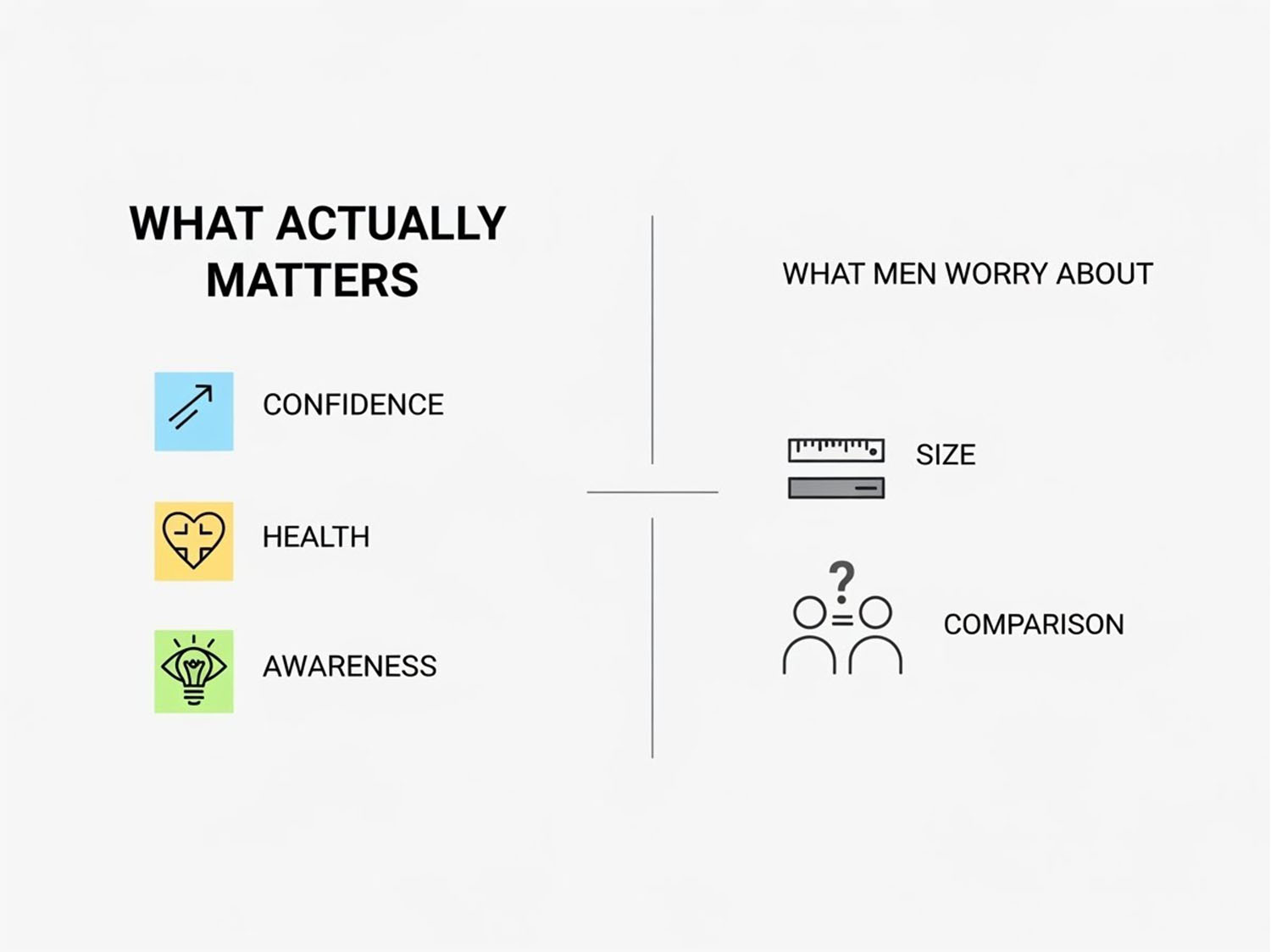
What Men Worry About vs What Actually Matters
| Common Male Concern | What Women Consistently Value |
|---|---|
| Penis size | Confidence and presence |
| Lasting a long time | Responsiveness and pacing |
| Porn-style performance | Emotional connection |
Myth #6: Lasting Longer Always Means Better Sex
Endurance has its place, but duration without connection often leads to boredom or discomfort.
Many women report an ideal window—long enough to build pleasure, short enough to stay engaging. Overly long sessions can cause dryness, soreness, or mental fatigue.
The goal isn’t to outlast a stopwatch. It’s to stay in sync.
Tip: Focus on responsiveness, not endurance contests.
“Most men lose confidence chasing myths instead of mastering what actually matters.”
Myth #7: Erectile Issues Mean You’re Weak or Broken
Occasional erection problems happen to almost every man. Stress, fatigue, alcohol, anxiety, poor sleep, and relationship tension all affect sexual function.
Persistent issues can signal cardiovascular problems, hormone imbalances, or mental strain—not a failure of manhood.
Ignoring these signs delays treatment and increases anxiety, which worsens the problem.
Tip: Treat erection issues like any other health signal—early attention beats denial.
Myth #8: Women Are Constantly Comparing Sizes
Most women aren’t running mental spreadsheets of past partners.
What sticks in memory is how a man made them feel—safe, wanted, excited, relaxed, or rushed and ignored. Size comparisons fade quickly when emotional experience is strong.
Men who worry obsessively about comparison often project their fears onto their partners.
Tip: Be present. Comparison disappears when connection is real.
Quick Questions Men Ask
Does penis size really affect sexual satisfaction?
Research shows size plays a minor role. Confidence, communication, and awareness matter far more to most women.
Is average size enough?
Yes. The majority of women report average size is more than sufficient for comfort and pleasure.
Myth #9: Confidence Comes From Size
Confidence comes from self-acceptance and competence, not anatomy.
Men who are comfortable with themselves project ease, which is attractive. Men who fixate on perceived flaws project tension, which is not.
Women are remarkably good at sensing when a man is at peace with himself.
Tip: Confidence grows when you stop fighting your own body.
Myth #10: Talking About Sex Ruins the Mood
Silence ruins sex far more often than conversation.
Clear, respectful communication improves satisfaction, trust, and relaxation. Asking what feels good—or listening when she tells you—signals maturity, not weakness.
Men who refuse to talk about sex often repeat the same mistakes and blame external factors instead of learning.
Tip: A short, honest conversation saves years of frustration.
Quick Start: What Actually Improves Performance
- Do: Prioritize sleep, fitness, and stress control
- Do: Communicate clearly with your partner
- Don’t: Compare yourself to porn standards
- Don’t: Chase unproven size products
The Bigger Picture: What Actually Matters
Strip away the myths and the noise, and a few fundamentals remain:
-
Health: Sleep, exercise, nutrition, and stress management directly affect performance.
-
Awareness: Paying attention beats memorizing techniques.
-
Confidence: Calm presence outweighs physical extremes.
-
Connection: Sex improves when it’s shared, not performed.
Penis size has become a cultural obsession because it’s easy to measure and easy to sell fear around. But in real bedrooms, it ranks far lower than men think.
The men who thrive sexually aren’t the ones chasing impossible standards. They’re the ones who stop measuring themselves against myths and start focusing on reality.
And reality, for most men, is far more forgiving—and far more promising—than they were ever led to believe.
Disclaimer: The articles and information provided by Genital Size are for informational and educational purposes only. This content is not intended to be a substitute for professional medical advice, diagnosis, or treatment. Always seek the advice of your physician or another qualified health provider with any questions you may have regarding a medical condition.