



 日本語
日本語  Deutsch
  English
  Español
  Français
  Português
Nations pause on November 11 to honor the fallen. This feature explains who observes Remembrance Day, how traditions vary, why meaning can fade, and how to restore sincerity through silence, gratitude, and teaching real history.
Remembrance Day, marked each November, honors the men and women who gave their lives in war. Yet, as public memory fades and political rhetoric swells, the solemn meaning of this day risks being replaced by slogans and hollow gestures. Across the world—from Canada to the United Kingdom, Australia, France, and beyond—millions still bow their heads at the eleventh hour. But the question remains: Are we still remembering what truly matters?
Did You Know?
- The poppy symbol comes from battlefields where poppies regrew among the graves in WWI.
- France rekindles the flame of the Unknown Soldier daily at the Arc de Triomphe.
- Germany’s Volkstrauertag remembers all victims of war and tyranny two Sundays before Advent.
The Quiet Moment at 11:00
Each year on November 11th, a hush falls over cities, towns, and villages. In that silence—whether observed beside a cenotaph, at a parade, or alone in an office cubicle—men and women across generations pause to remember those who never came home.
Remembrance Day, known as Armistice Day in many countries, began with a promise: “Never again.” When the guns of the First World War fell silent in 1918, the world swore to remember the cost of victory—the millions of young men who marched toward an uncertain death on foreign soil.
They were farmhands, mechanics, teachers, brothers, and sons. Their courage wasn’t theatrical. It was quiet, steady, and brutally human.
Yet over a century later, that silence feels more fragile than ever.
A Day Shared Across Nations
Remembrance Day is not confined to one flag. It belongs to a global fraternity of nations shaped by war.
-
Canada, the United Kingdom, and Australia observe it every November 11th, marked by the red poppy—an emblem born from the mud of Flanders Fields.
-
France honors the Armistice de la Première Guerre Mondiale with ceremonies at the Arc de Triomphe, where the flame of the Unknown Soldier burns day and night.
-
New Zealand holds both Anzac Day (April 25th) and Armistice Day, each carrying deep national identity tied to loss and endurance.
-
Germany, too, observes Volkstrauertag—People’s Day of Mourning—two Sundays before Advent, remembering all victims of war, including civilians and those who suffered under tyranny.
-
The United States, though differing slightly in tone, observes Veterans Day on the same date, a day that honors service rather than mourning sacrifice.
These rituals—across language and border—share one truth: remembrance is not about glorifying war. It is about confronting it.
The Meaning That Once United Us
There was a time when Remembrance Day was personal. Veterans returned with scars—some visible, many not. Families kept photographs of sons who never came home. The poppy wasn’t fashion; it was grief worn publicly.
After World War II, and through Korea and Vietnam, the act of remembrance carried a raw authenticity. The older generation reminded the young that peace was earned by the blood of ordinary men asked to do extraordinary things. The stories were told at dinner tables and school assemblies. Boys heard about trench life, the cold, the waiting. Girls heard of rationing, telegrams, and endurance on the home front.
The silence at 11:00 wasn’t ceremonial—it was personal.
When Memory Meets Modern Politics
Today, remembrance competes with noise. Social media hashtags, televised events, and political statements often overshadow the humble meaning of that silence. The poppy has become, in some circles, a political symbol rather than a mark of gratitude.
Some politicians in the West, eager to appeal to modern sensibilities, reshape national traditions into platforms for ideology. Remembrance speeches increasingly reference climate policy, diversity initiatives, or contemporary grievances that bear no relation to the battlefield sacrifices of the 20th century. The result? The men who once fought for freedom risk being reduced to talking points in culture wars they never chose.
Critics point out that remembering the fallen isn’t “exclusionary.” It’s historical respect. When nations forget the humanity of their soldiers, they risk severing the link between freedom and responsibility.
True remembrance doesn’t require partisan slogans. It requires silence—and gratitude.
Questions & Answers
The Fading Generation
The last surviving veterans of the First World War have long passed. Those of the Second are now few, their memories fragile and precious.
In Canada, less than 10,000 Second World War veterans remain. In the UK, around 100,000. Most are in their late 90s or older. Their stories are disappearing faster than we can record them. When they are gone, remembrance will rely entirely on us—the generations that never knew war firsthand.
That responsibility is heavy. Because remembrance without memory is ceremony without meaning.
Men, Masculinity, and Sacrifice
Remembrance Day carries a distinctly masculine weight—not because only men suffered, but because the overwhelming majority of soldiers were men. They lived in a world that expected stoicism, endurance, and duty.
For many men today, those words—duty, sacrifice, courage—sound outdated or even uncomfortable. Yet these were the qualities that built the freedoms modern societies enjoy. These men were not conquerors; they were protectors. Their masculinity wasn’t about dominance—it was about responsibility.
To understand Remembrance Day properly, men must reconnect with that older idea of strength: one that combines courage with compassion, pride with humility, and toughness with tenderness.
It’s not about glorifying war. It’s about honoring the moral architecture of those who faced it.
Why Some Forget
In classrooms across the West, war history is being simplified. Complex conflicts are reframed through the lens of current politics. Terms like “colonialism,” “hegemony,” and “patriarchy” dominate discussions where once bravery, suffering, and human cost were central.
The young are taught to analyze rather than empathize. To critique rather than understand. And in doing so, the faces of the fallen fade into abstraction.
It is not revisionism that threatens remembrance—it is indifference.
How Other Nations Remember
While some Western nations politicize remembrance, others hold fast to solemn tradition.
In France, schoolchildren still learn about Verdun, the Somme, and the trenches. The annual Armistice ceremony remains deeply national, with minimal political intrusion.
In Poland, Independence Day (November 11) intertwines remembrance with patriotism, reflecting the country’s long struggle for sovereignty.
In Israel, the Yom HaZikaron memorial day stops the nation cold—literally. Sirens sound across the country; traffic halts; men and women stand still in silent respect.
These gestures show that remembrance thrives when nations see sacrifice as sacred, not negotiable.
Remembrance Observances by Country
| Country | Name / Date | Core Rituals |
|---|---|---|
| Canada / UK / Australia | Remembrance Day – 11 Nov | Poppy, two-minute silence, wreath-laying |
| France | Armistice – 11 Nov | Arc de Triomphe ceremony, eternal flame |
| New Zealand | Anzac (25 Apr), Armistice (11 Nov) | Dawn services, roll of honour |
| Germany | Volkstrauertag (2 Sundays before Advent) | National mourning for victims of war/tyranny |
| United States | Veterans Day – 11 Nov | Honours service; ceremonies at Arlington |
| Poland | Independence Day – 11 Nov | Patriotic ceremonies, military honors |
| Israel | Yom HaZikaron (spring) | Nationwide sirens; moment of silence |
Common Rituals
- Two-minute silence
- Wreath-laying
- Reading of names
Unique Traditions
France’s eternal flame; Israel’s national siren; NZ’s dawn services.
Why It Matters
Connects freedom to responsibility; keeps the cost of peace visible.
A Modern Disconnect
In much of today’s West, remembrance has become symbolic rather than spiritual. Younger generations often see it as a “holiday” rather than a day of national mourning. Employers treat it as a long weekend. Media outlets use it as an opportunity for brand alignment or political commentary.
The result? A cultural disconnect between those who gave everything and those who inherited everything.
It isn’t that men and women today lack respect. It’s that society has lost the emotional vocabulary to express it. Where past generations bowed their heads, we post hashtags. Where they kept silence, we post opinions.
“The men who fought for freedom didn’t do it for applause or ideology. They did it because someone had to stand when others could not.”
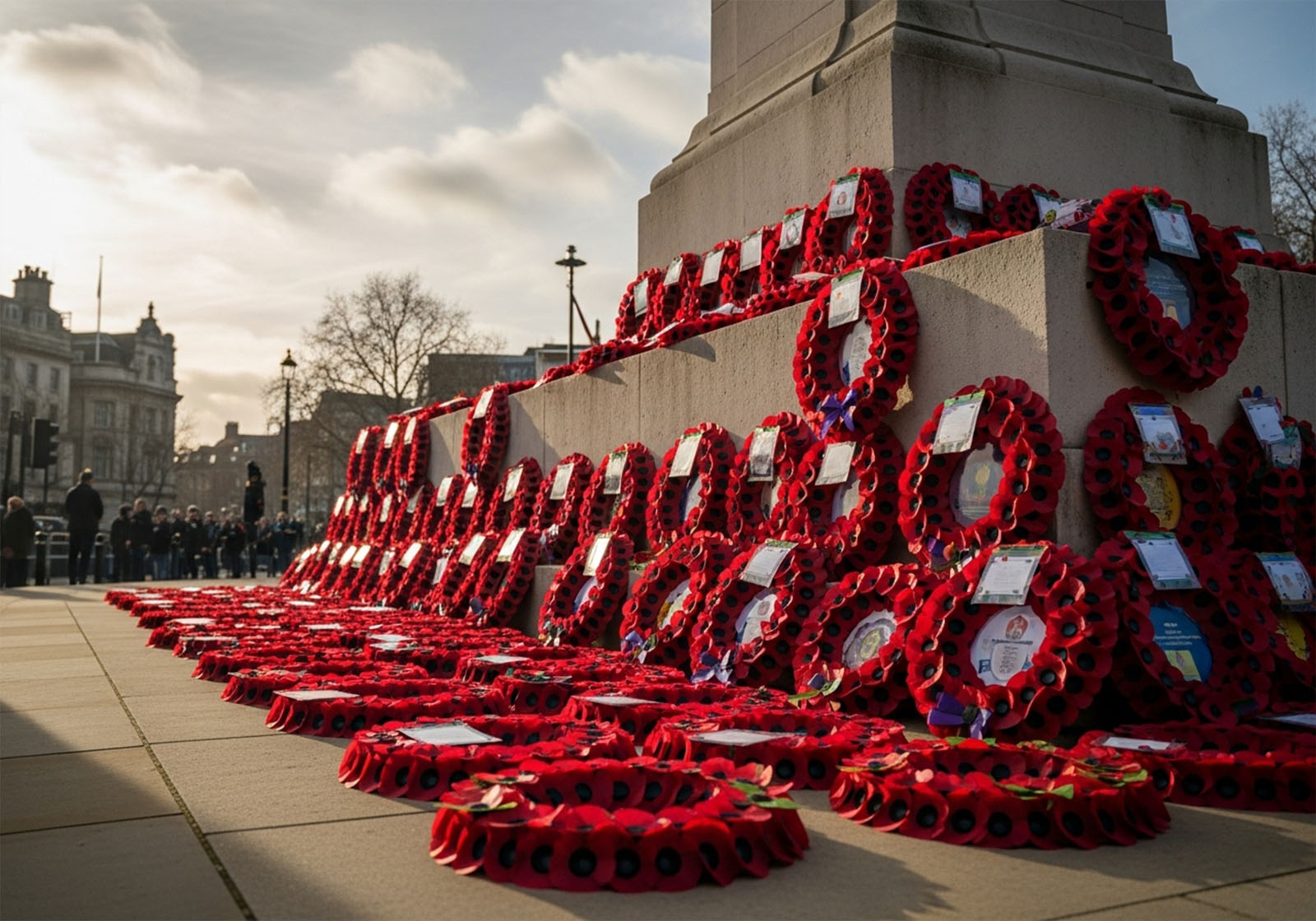
Restoring Meaning
Restoring the meaning of Remembrance Day doesn’t require grand speeches or policy changes. It requires sincerity.
Wear the poppy not because it’s expected, but because it matters.
Pause at 11:00 not because your calendar reminds you, but because time itself should.
Teach children not just who fought, but why they fought—and why they must be remembered.
It’s easy to forget that freedom isn’t a given. It was purchased—dearly—by those who never got to grow old.
What We Owe Them
At the heart of Remembrance Day lies a simple question: What do we owe the dead?
We owe them honesty. To remember the horror of war as much as the heroism.
We owe them humility. To admit that peace was never inevitable.
We owe them vigilance. To resist turning remembrance into political theater.
Most of all, we owe them continuity. Each generation must renew the promise made in 1918—to remember, so that “never again” remains more than words carved in stone.
A Quiet Promise
As the world grows noisier, silence becomes revolutionary. On November 11th, at the eleventh hour, take that silence personally. Picture a young man in uniform standing knee-deep in mud, or a nurse tending to the wounded under dim candlelight. Imagine the telegram that shattered a family’s peace.
Remembrance isn’t about the past—it’s about the moral continuity of a nation that refuses to forget.
So, as the bugle sounds and poppies bloom once more, remember this: the price of forgetting is far higher than the price of remembrance.
Quick-Start: How to Observe with Respect
- 11:00 local time, 11 Nov
- Poppy on left lapel
- Attend a local service
- Timer for two-minute silence
- Wreath or poppy pin
- Donation to veteran support
- Stand quietly at 11:00
- Explain the meaning to children
- Keep the tone sincere
- Avoid turning it into debate
- No performative gestures
- Don’t skip the silence
By Theo Navarro
Sources & Further Reading
-
Commonwealth War Graves Commission – Historical Archives
-
Canadian War Museum – The First World War and Armistice History
-
BBC Archives: Remembrance and the Poppy Tradition
-
Imperial War Museum (UK): The Lasting Impact of WWI
-
National Archives of France – Armistice Documentation and Memorials
Disclaimer: The articles and information provided by Genital Size are for informational and educational purposes only. This content is not intended to be a substitute for professional medical advice, diagnosis, or treatment. Always seek the advice of your physician or another qualified health provider with any questions you may have regarding a medical condition.