


 日本語
日本語  Deutsch
  English
  Español
  Français
  Português
There is an old, weathered saying that "manhood is not a destination, but a state of being." To the modern guy sitting in a cubicle in Chicago or London, manhood might feel like a series of checkboxes: career success, physical fitness, providing for a family.
But if you step outside the glass and steel of the West and look through the lens of a cultural anthropologist, you find that masculinity is far more than a checklist. It is a biological reality shaped by the harsh, unforgiving demands of different environments.
Anthropologists don't just sit in libraries; they go where the air is thin, the deserts are hot, and the stakes are high. They study how men across the globe define themselves, not through abstract theory, but through action, ritual, and the relentless pursuit of respect. From the cattle-herding tribes of East Africa to the hyper-competitive boardrooms of Tokyo, the core of masculinity remains a constant struggle for competence and status.
In Brief: The Anthropological View
- The Goal: To understand how different societies harness male energy for the benefit of the group.
- The Tools: Fieldwork, observation of rituals, and historical analysis of honor codes.
- The Do's: Respect local traditions; look for the "why" behind the "what."
- The Don'ts: Don't assume Western standards of behavior apply to every environment.
The Biological Bedrock
Before we look at the cultural variations, we have to acknowledge the foundation. Anthropologists like David Gilmore, author of Manhood in the Making, have noted that across almost all cultures, masculinity is not something you are simply born with—it is something you must earn.
Biologically, men are built for certain roles. Higher testosterone levels, greater bone density, and upper-body strength aren't accidental traits; they are tools for protection and provision. While modern life has cushioned us from the need to hunt big game or defend the village perimeter, the underlying drive to be "the man who can" remains hardwired into our DNA. Anthropology shows us that while the expression of masculinity changes, the requirement to prove it is universal.
The Three P’s of Manhood
Anthropologists generally agree on three core pillars that define a man’s worth in most traditional societies:
-
Protector: The ability to stand between one's family and danger.
-
Provider: The skill to bring home resources, whether it’s a harvested elk or a paycheck.
-
Procreator: The capacity to build a legacy and ensure the survival of the lineage.
The Warrior Ethos: East Africa and the Maasai
Cultural Insight: The Moran
In Maasai culture, a Moran is not just a soldier; he is a guardian of the community's soul. His transition from childhood involves more than physical tests; it requires learning the intricate laws of the tribe and the art of stoic silence. This proves that even in the most rugged environments, masculinity is as much about intellectual discipline as it is about physical force.
In the plains of Kenya and Tanzania, the Maasai people offer a stark look at masculinity in its most rugged form. To a Maasai man, life is defined by the transition from a boy to a Moran (warrior).
Anthropologists studying the Maasai have observed that their definition of a man is tied directly to his bravery and his ability to manage cattle—the tribe's primary wealth. Historically, a young man had to hunt a lion with nothing but a spear to prove his worth. While modern laws have largely ended the lion hunt, the ritual of circumcision remains a pivotal, public test of endurance. A boy must undergo the procedure without flinching; to show pain is to bring shame upon his entire family.
This "stoic endurance" is a recurring theme. It isn't about being unfeeling; it’s about proving that when the time comes to defend the herd from a predator, you won't crack under pressure. In this context, masculinity is a functional necessity for the survival of the group.
The Honor Codes of the Mediterranean
Moving north to the Mediterranean—think rural Greece, Sicily, or the mountains of Montenegro—anthropologists find a different flavor of masculinity: the culture of honor. Here, a man’s worth is tied to his reputation and the purity of his household.
In these societies, "being a man" is a fragile status that can be lost in an instant. It is a zero-sum game. If someone insults your family and you don't respond, your "manhood" is diminished. This has led to the development of deep-seated traditions of hospitality balanced with a quickness to defend one's name.
Anthropologists note that in these regions, men often congregate in male-only spaces—coffee houses or village squares—where they engage in ritualized verbal sparring. This isn't just "hanging out." It’s a constant, subtle negotiation of status. Who is the smartest? Who is the strongest? Who is the most capable? The Mediterranean model reminds us that masculinity is often a public performance, judged by one's peers.
"Manhood is not a destination, but a state of being—a status that must be won through action and defended through character."— Theo Navarro
The Competitive Hierarchy of East Asia
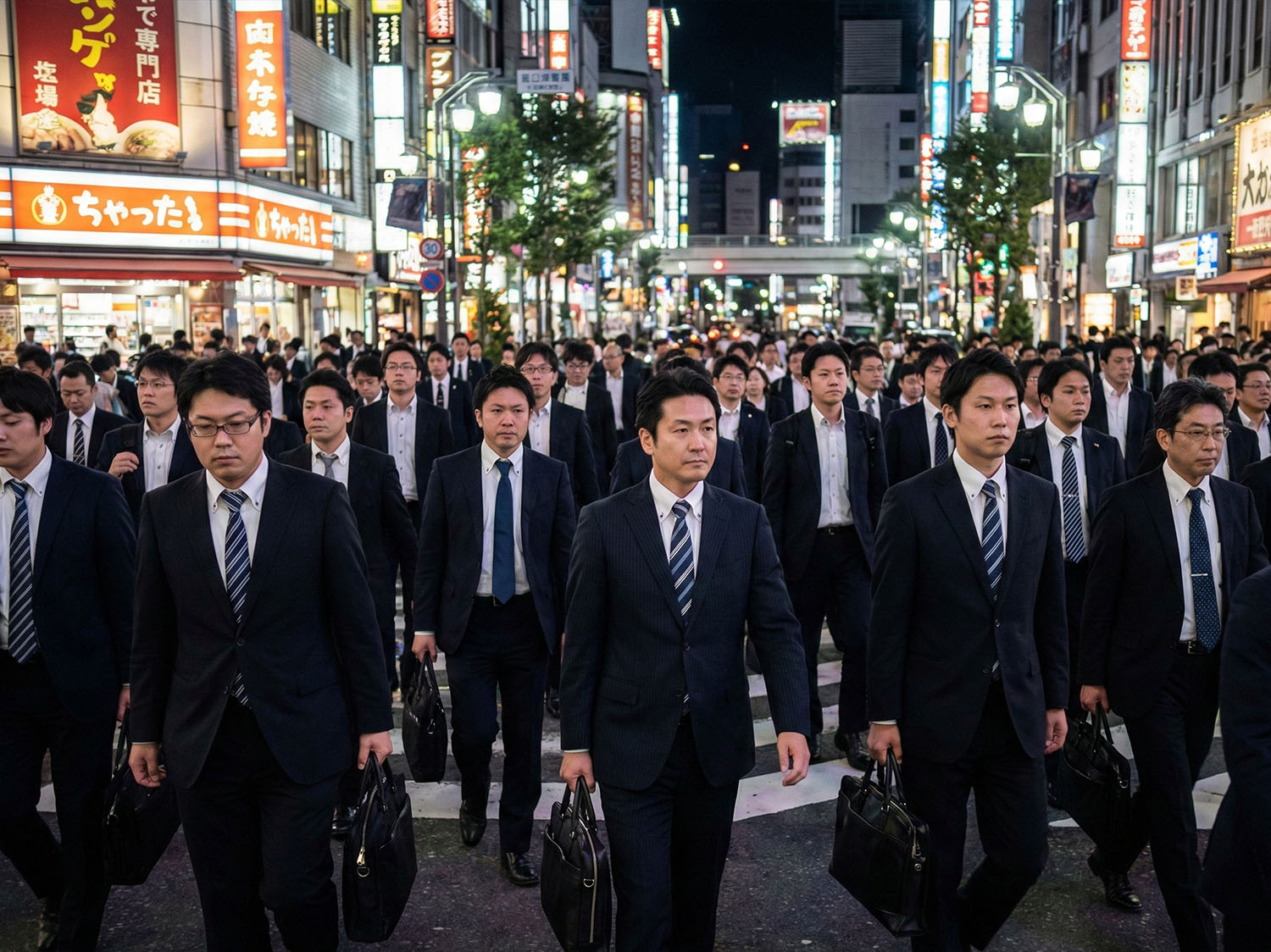
In the high-pressure environments of Japan and South Korea, anthropologists see masculinity through the lens of the "Salaryman." While the spear has been replaced by the briefcase, the drive for dominance remains.
In Japanese culture, the concept of Haji (shame) and Giri (duty) governs a man’s life. A man is defined by his loyalty to his "tribe"—which in the modern era is his company. The grueling hours and the expectation to outwork everyone else are modern echoes of the Samurai bushido code.
Researchers have found that in these societies, masculinity is less about physical aggression and more about discipline and endurance. The man who can stay at his desk until 2:00 AM and still show up for a 7:00 AM meeting is the one who commands respect. It is a grueling, mental form of combat where the prize is seniority and the ability to provide a stable, high-status life for one's family.
The Latin American Machismo and Caballerismo
Perhaps no term is more misunderstood than Machismo. In Western media, it’s often used as a slur for boorish behavior. However, anthropologists studying Latin American cultures find a much more nuanced reality.
True Machismo is certainly about strength and virility, but it is often balanced by Caballerismo (chivalry). A man is expected to be the head of the household, yes, but he is also expected to be a protector who is deeply devoted to his family.
In rural Mexico or Brazil, a "real man" is one who is valiente (brave) but also trabajador (hardworking). There is a deep respect for the man who uses his physical strength to provide for his wife and children. The focus is on the "house" as the center of the universe, and the man’s role is to be the pillar that holds it up.
The "Big Man" of Melanesia
In the islands of the South Pacific, anthropologists discovered a unique social structure known as the "Big Man" system. Here, masculinity isn't inherited; it is built through charisma and economic skill.
A "Big Man" gains his status not by hoarding wealth, but by giving it away. He organizes massive feasts, settles disputes, and manages the exchange of pigs and shells. To be a man in this culture is to be a master of social politics. It requires a high degree of intelligence, negotiation skills, and the ability to command an audience.
This highlights an important anthropological find: masculinity isn't just about muscles. It’s about the ability to influence other men. Whether it’s a tribal leader in Papua New Guinea or a CEO in Manhattan, the "Big Man" archetype is alive and well.
The Modern Crisis: What Happens When the Roles Vanish?
As we look across these continents, a pattern emerges. In every traditional culture, masculinity is a "won" status. It requires a trial, a period of service, and a clear set of responsibilities.
But what happens in the modern West, where many of these traditional roles have been stripped away? Anthropologists are increasingly looking at "the crisis of masculinity" in developed nations. When a man no longer needs to hunt, defend against physical threats, or perform manual labor to provide, he can feel adrift.
Without a "rite of passage"—a clear moment where a boy becomes a man—many young men in the West are left in a state of "extended adolescence." We see this in the rise of men seeking out high-intensity sports, martial arts (like Brazilian Jiu-Jitsu), or grueling outdoor challenges. These aren't just hobbies; they are an attempt to recreate the "ordeal" that anthropology tells us is necessary for a man to feel confident in his identity.
| Region | Primary Value | Key Ritual / Activity | Core Goal |
|---|---|---|---|
| East Africa (Maasai) | Bravery | Circumcision & Cattle Herding | Protection of Tribe |
| Mediterranean | Honor & Reputation | Public Discourse & Hospitality | Family Integrity |
| East Asia | Discipline & Duty | Academic & Corporate Success | Stability & Legacy |
| Latin America | Strength & Providence | Fatherhood & Hard Labor | Household Authority |
| Melanesia | Influence & Generosity | Feasting & Negotiation | Social Leadership |
Masculinity & Culture: FAQ
Why This Matters to You
Understanding how anthropologists see masculinity isn't just an academic exercise. It gives us permission to acknowledge that our drives—to compete, to protect, and to be respected—aren't "toxic" or outdated. They are fundamental parts of the human experience that have been expressed in a thousand different ways over thousands of years.
Whether you are a man in a rural village or a high-rise apartment, the core questions remain the same:
-
Can I be relied upon when things get difficult? * Am I competent in my chosen field? * Do I command the respect of my peers?
The "masculine" is not a monolith. It is a wide, rugged landscape. But across every continent, the most respected men are those who take the raw materials of their biology and forge them into something useful for their families and their communities.
Anthropology shows us that being a man is a high calling. It’s hard, it’s often competitive, and it’s never guaranteed. But that, perhaps, is exactly why it’s worth pursuing. We don't want a trophy for just showing up; we want the satisfaction of knowing we’ve passed the test—whatever that test may be in our particular corner of the world.
Disclaimer: The articles and information provided by Genital Size are for informational and educational purposes only. This content is not intended to be a substitute for professional medical advice, diagnosis, or treatment. Always seek the advice of your physician or another qualified health provider with any questions you may have regarding a medical condition.